
Set Up Magento RMA for Returns: Best Magento RMA Extensions
Magento RMA (Return Merchandise Authorization) streamlines the return process for a Magento store. With Magento RMA, customers can effortlessly submit requests from the storefront to return eligible items. This article will focus on configuring RMA and the best extensions to use.
Understanding Magento Hosting Requirements
Magento, now branded as Adobe Commerce, stands as one of the most powerful e-commerce platforms available today. This robust open-source solution powers over 660,000 websites globally. It processes an astounding $155 billion in annual transactions. Understanding why specialized Magento hosting differs from standard web hosting is crucial for making an informed decision.
What Makes Magento Hosting Unique
Hosting Resource Requirements Comparison
Understanding the infrastructure demands of Magento commerce platforms
| Resource Category | Standard Web Hosting | Magento Requirements |
|---|---|---|
|
Memory RAM
Critical
|
1-2GB typical Sufficient for basic websites |
4GB minimum 8-16GB recommended for production |
|
PHP Memory Limit
High
|
128-256MB Standard for most applications |
512MB minimum Often 1GB+ for complex catalogs |
|
Database System
Required
|
Basic MySQL Default configuration |
Optimized MySQL/MariaDB Query cache, InnoDB tuning, clustering |
|
Caching Layers
Multiple
|
Basic file caching Browser cache, simple CDN |
Multi-layer system Varnish, Redis, Elasticsearch, Full-page cache |
Infrastructure Impact
Magento requires 2-4x the resources of standard web hosting due to its complex architecture, extensive caching requirements, and database-intensive operations. This infrastructure demand directly impacts hosting costs and performance planning.
Unlike generic hosting solutions, Magento-specific hosting addresses the platform's demanding requirements:
-
Resource Intensity: Magento requires substantial server resources. This includes high-performance CPUs, ample RAM (minimum 4GB for production), and fast SSD storage. These handle complex product catalogs and dynamic content generation.
-
PHP Setup: The platform demands specific PHP configurations and extensions. These include opcache, intl, and mcrypt. Memory limits often exceed 512MB for best performance.
-
Database Performance: Magento's multi-layered database architecture requires MySQL tuning and proper indexing. It often benefits from database clustering for high-traffic stores.
-
Caching Requirements: Advanced caching layers including Varnish, Redis, and Elasticsearch are needed. These maintain fast page load times under heavy traffic conditions.
Historical Context and Evolution
Magento Market Evolution Timeline
Platform growth and major milestones demonstrating market maturity
Platform Launch
Founded by Varien Inc., introducing open-source e-commerce platform
First Stable Release (1.0)
Production-ready platform launched, establishing market presence
eBay Acquisition
Major validation of platform value and growth potential
Adobe Acquisition
Enterprise integration and cloud transformation era begins
Current Market Position
Magento's journey began in 2007 when Varien Inc. launched the platform. It revolutionized e-commerce with its flexible, open-source approach. Key milestones include:
- 2008: First stable release (1.0) established Magento as a serious Shopify competitor
- 2011: eBay acquisition for $180 million brought enterprise-level resources
- 2018: Adobe's $1.68 billion acquisition integrated Magento into the Adobe Experience Cloud
- 2021: Rebranding to Adobe Commerce focused on cloud-native abilities
- 2024-2025: Focus on headless commerce, AI integration, and progressive web applications
Current Market Position
Today's Magento ecosystem faces both opportunities and challenges:
- Strengths: Unparalleled customization, B2B commerce leadership, and enterprise scalability
- Challenges: Complexity requiring skilled developers, higher hosting costs, and competition from simpler platforms
- 2025 Trends: AI-driven personalization, headless architecture adoption, and better security measures
Why Support Quality Matters
Magento Performance Impact Metrics
The critical financial and performance impacts of poor hosting quality
average e-commerce downtime cost per minute
of users abandon sites taking longer than 3 seconds to load
annual churn rate from poor support response times
server response time target for good user experience
In the high-stakes world of e-commerce, downtime is devastating. Industry studies show that:
- Average e-commerce downtime costs $5,600 per minute
- 40% of users abandon sites that take longer than 3 seconds to load
- Poor support response times can lead to 25% annual churn rates
This reality makes 24/7 expert support not just a nice-to-have feature. It's a business-critical requirement for Magento merchants.
Top 7 User-Rated Magento Hosting Providers
1. MGT-Commerce
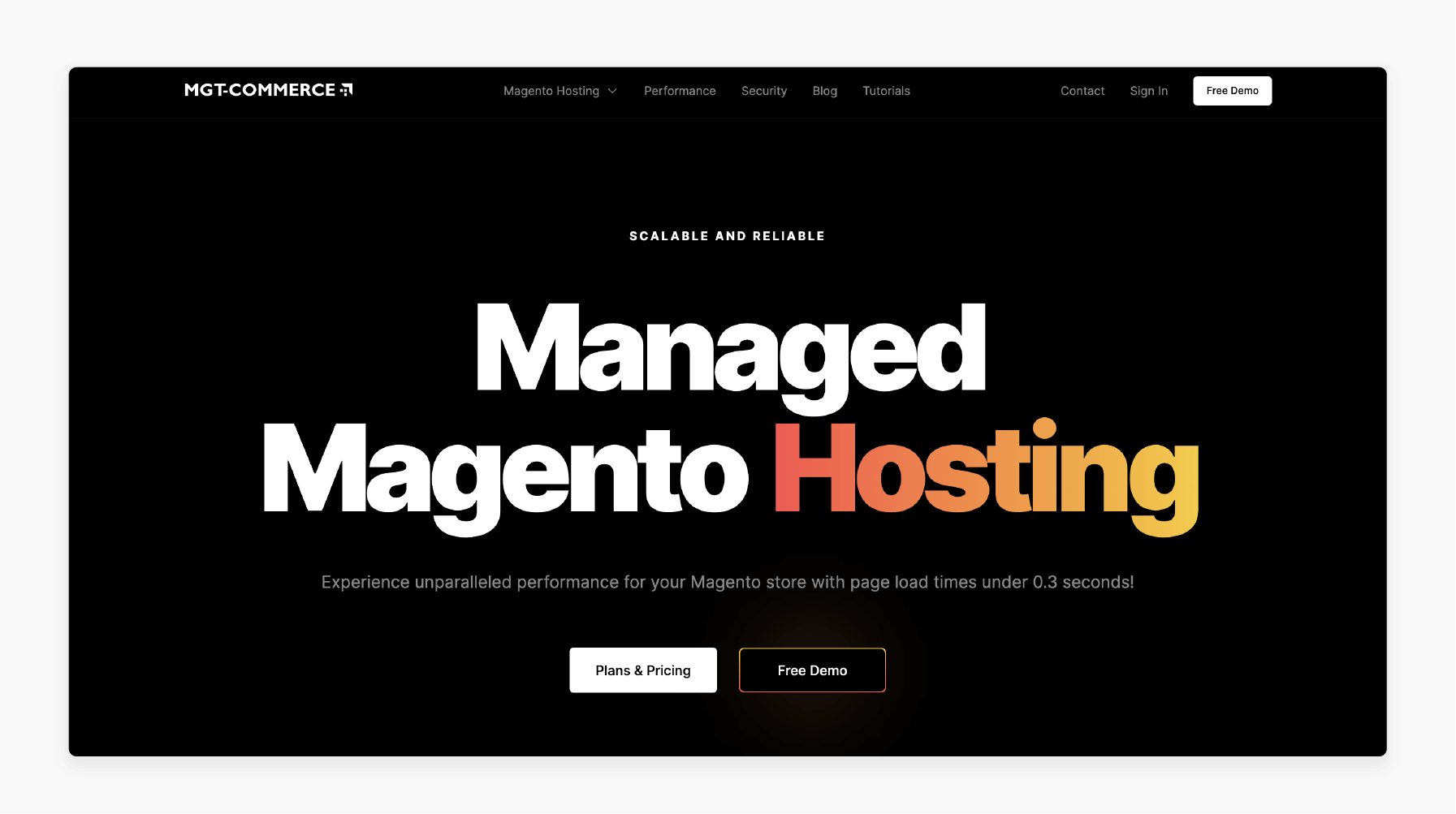
Overview: European-based MGT-Commerce specializes in high-performance Magento hosting with enterprise-grade features.
Key Features:
- AWS-tuned infrastructure with Varnish caching
- Blazing fast load times (average 0.3 seconds)
- Advanced security with DDoS protection and WAF
- Dedicated Magento support team
- AWS data centers for GDPR compliance
2. Nexcess
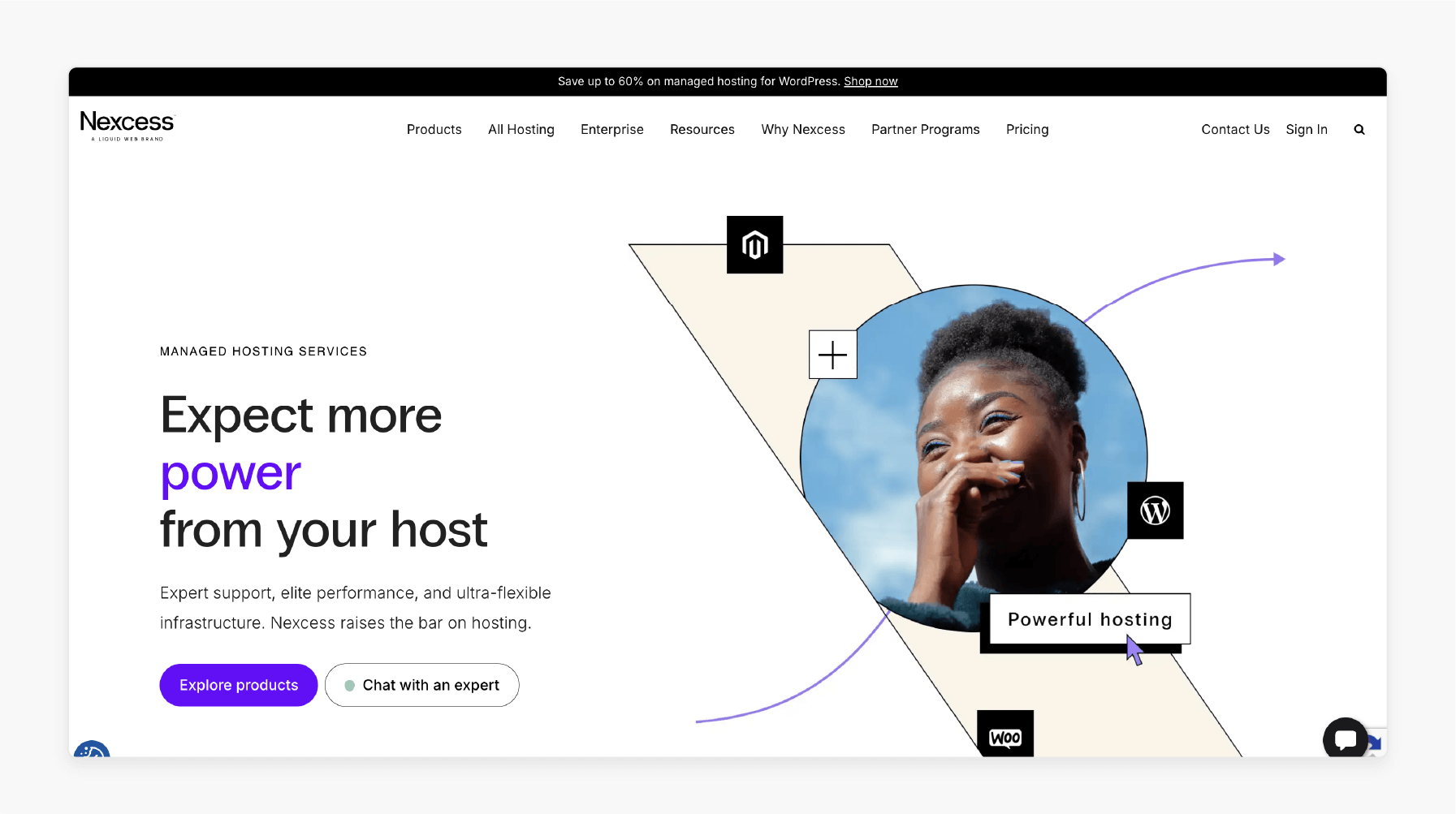
Overview: Nexcess has built its reputation as the premier managed Magento hosting provider. It offers deep platform expertise and unwavering focus on performance.
Key Features:
- Fully managed Magento hosting with auto-scaling abilities
- Advanced security including PCI compliance and DDoS protection
- Integrated CDN and performance tuning tools
- 24/7 expert support from Magento-certified technicians
- One-click staging environments and automated backups
3. SiteGround
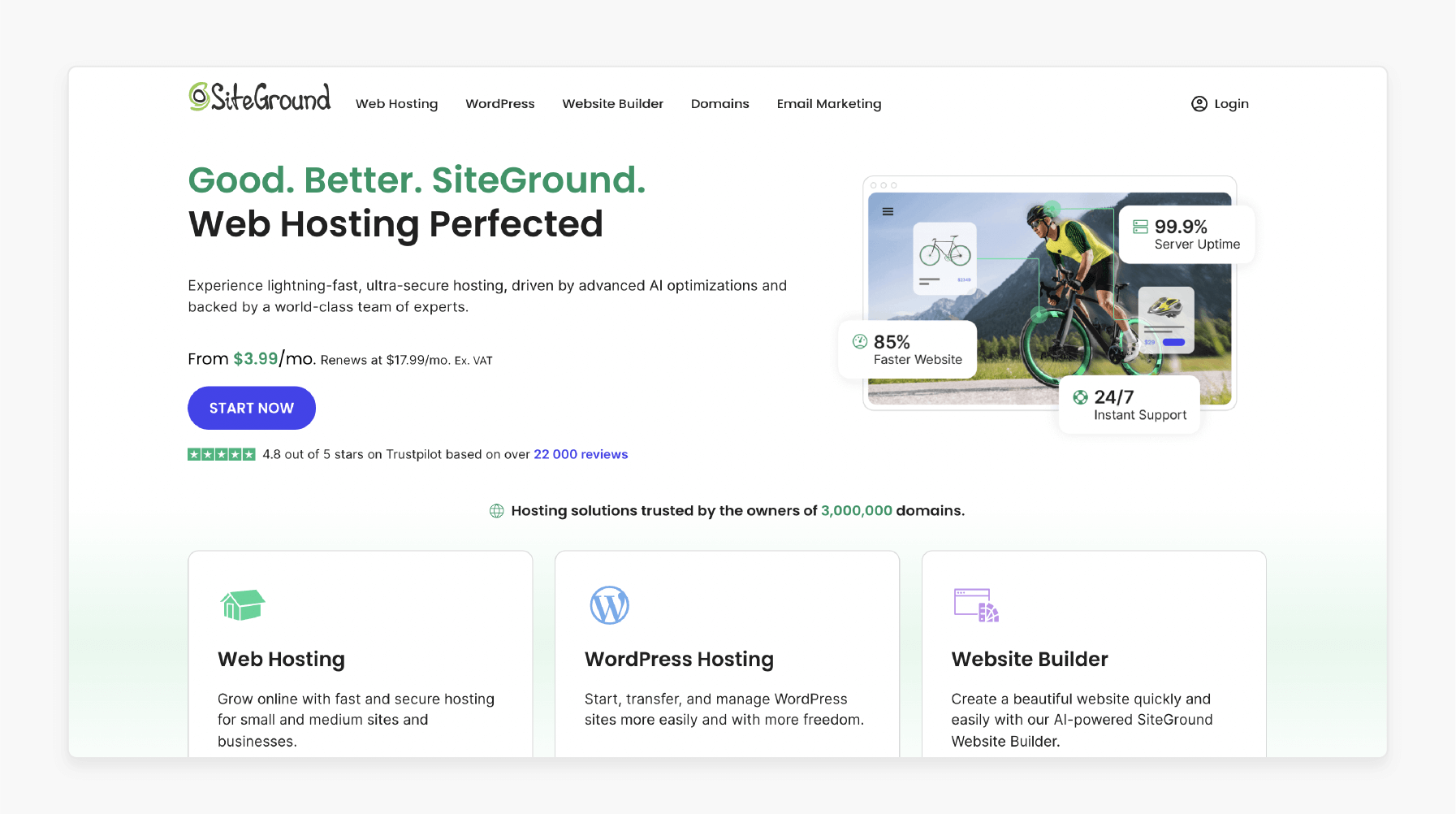
Overview: SiteGround combines user-friendly management with solid Magento tuning. This makes it ideal for growing businesses.
Key Features:
- Magento-tuned servers with custom caching solutions
- Free SSL certificates, daily backups, and CDN integration
- 24/7 live chat support with above-average response times
- User-friendly interface suitable for non-technical users
- Strong security features including proactive monitoring
4. Cloudways
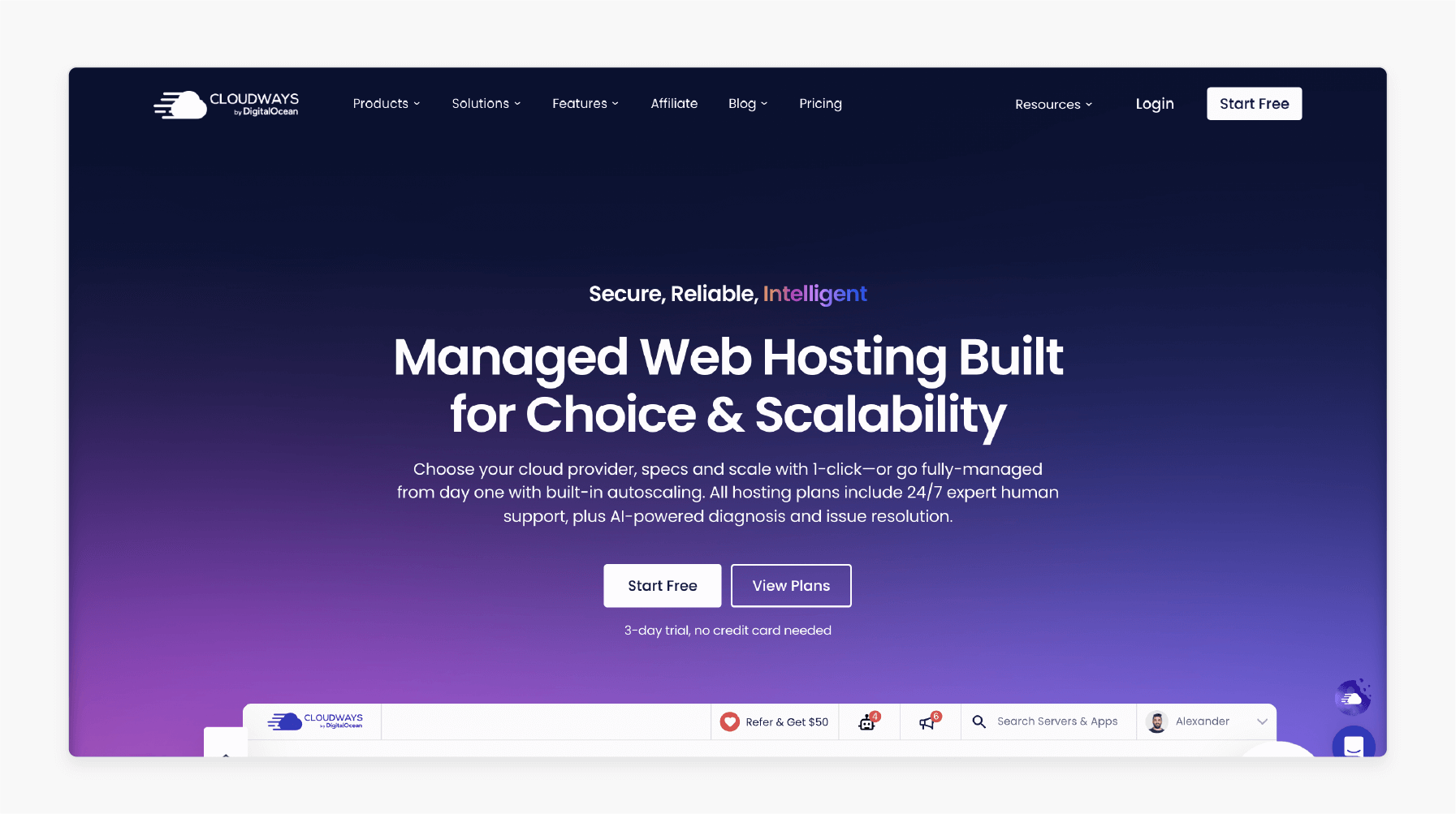
Overview: Cloudways revolutionizes Magento hosting by offering managed cloud services across multiple infrastructure providers.
Key Features:
- Choice of cloud providers (AWS, Google Cloud, DigitalOcean)
- Advanced caching (Varnish, Redis) and performance tuning
- Pay-as-you-scale pricing model
- One-click staging and Git integration
- 24/7 chat support with decent response times
5. A2 Hosting
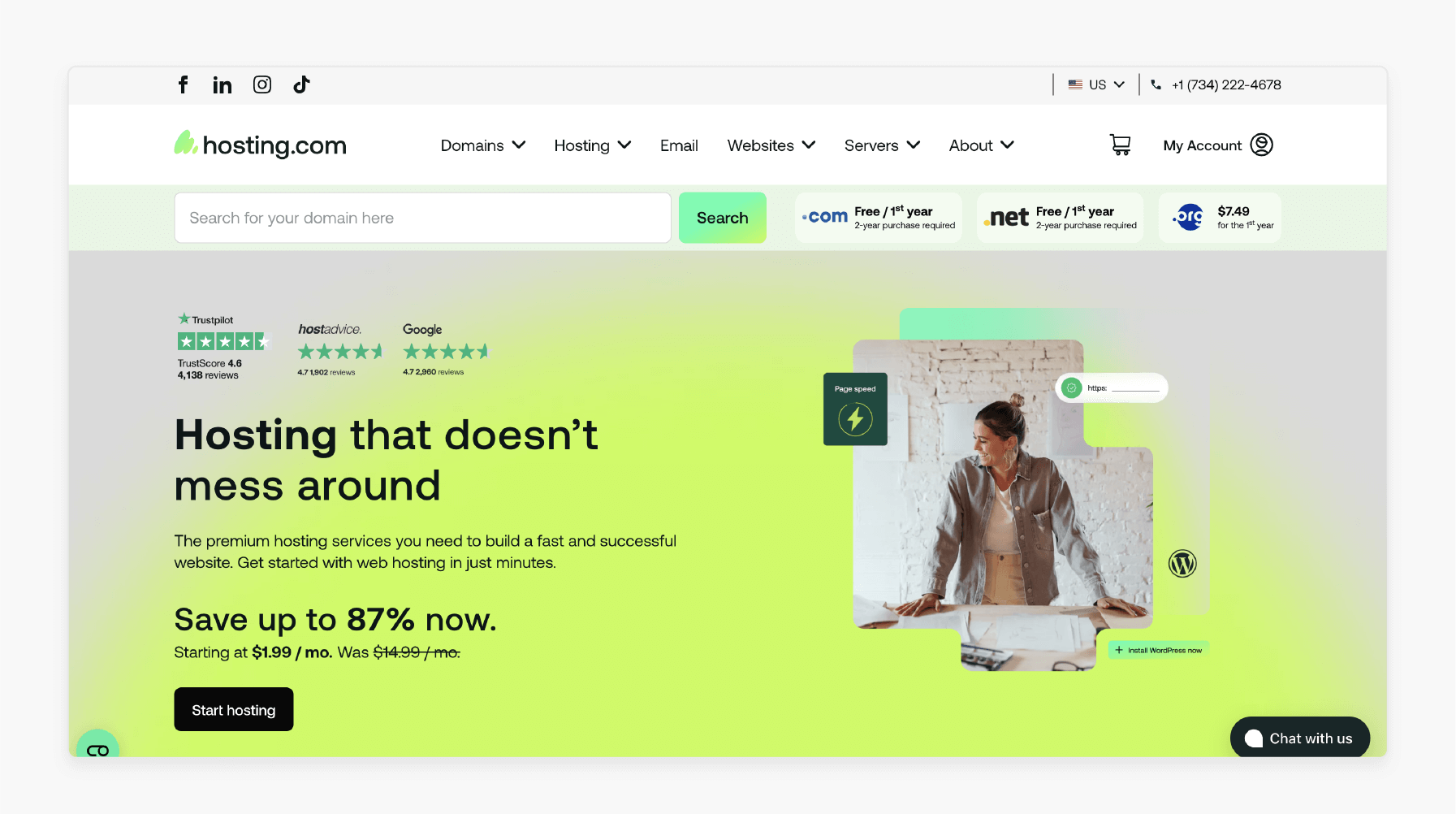
Overview: A2 Hosting's "Turbo" servers and unlimited policies make it attractive for high-traffic Magento stores.
Key Features:
- Turbo servers with up to 20x faster page loads
- Unlimited SSD storage and bandwidth
- Anytime money-back guarantee
- Free site migration and SSL certificates
- Environmental commitment with carbon-neutral hosting
6. Hostinger
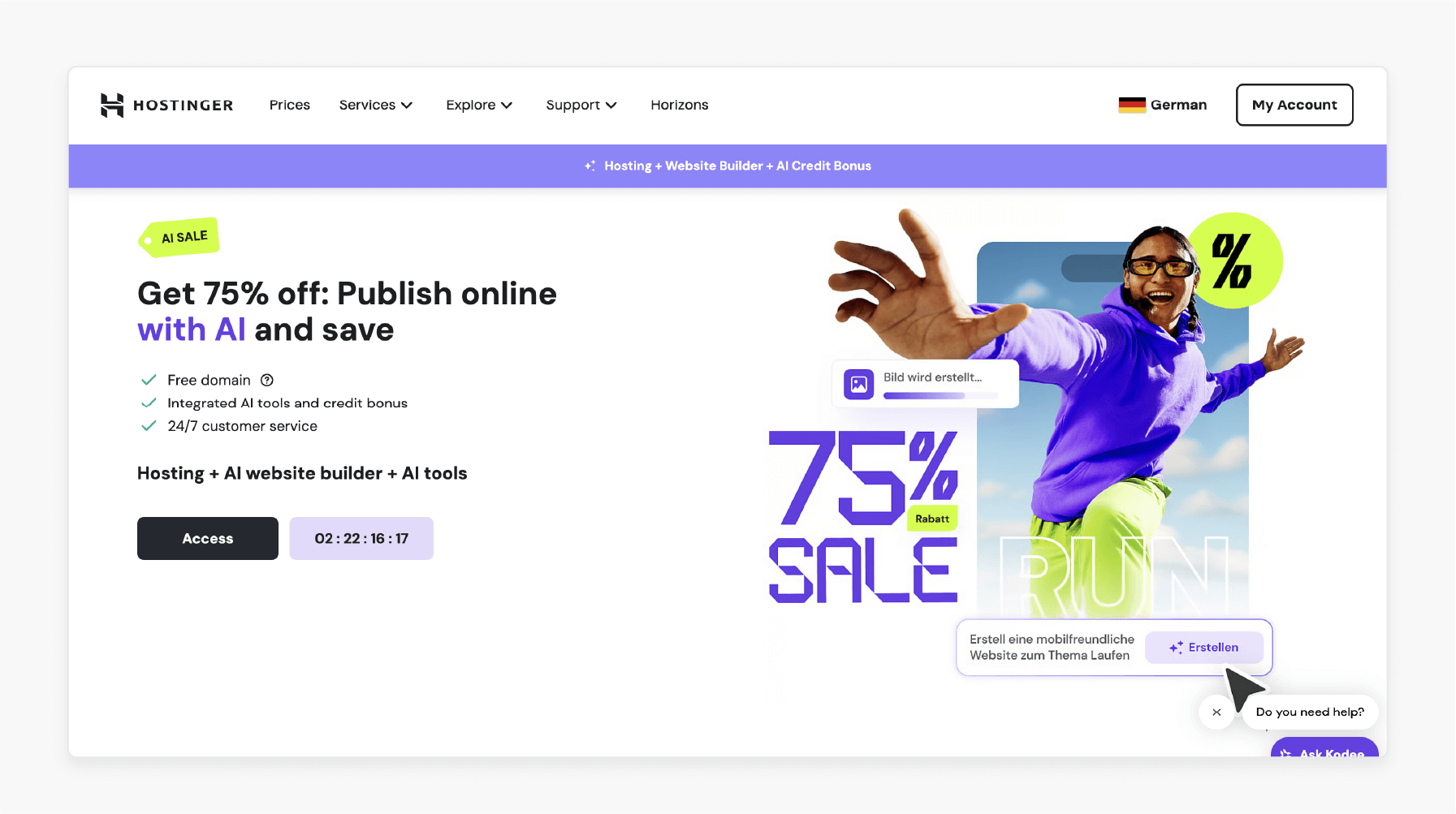
Overview: Hostinger offers affordable Magento hosting with modern features. Recent service quality concerns have emerged.
Key Features:
- LiteSpeed servers with better performance
- AI-powered website builder tools
- 30-day money-back guarantee
- Budget-friendly pricing structure
- Global data center network
7. Liquid Web
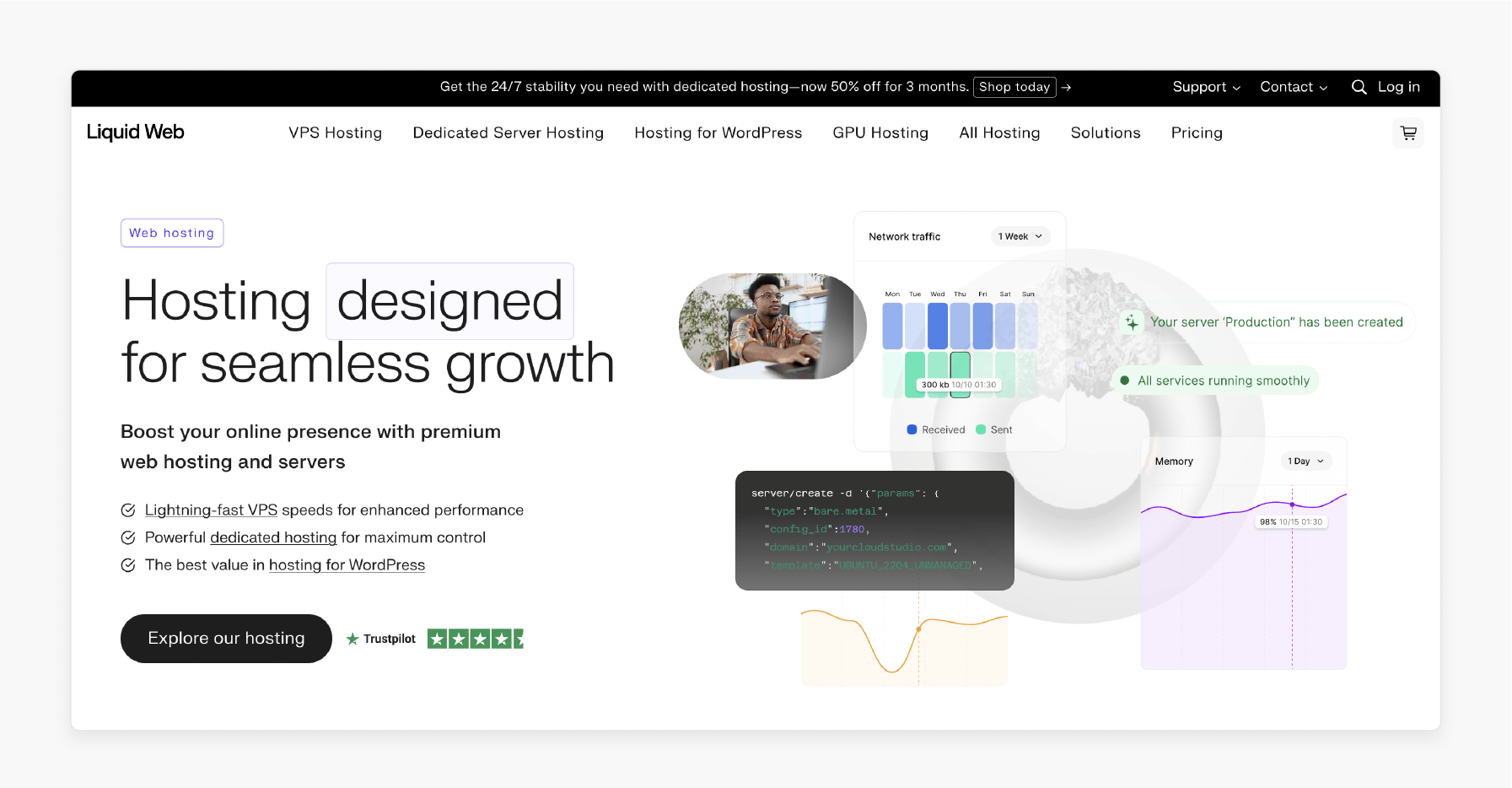
Overview: Liquid Web positions itself as the premium choice for enterprise Magento deployments requiring maximum reliability.
Key Features:
- Fully managed hosting with white-glove service
- 100% uptime SLA with enterprise-grade infrastructure
- "Heroic Support" with guaranteed response times
- Advanced security and compliance features
- Proactive monitoring and maintenance
How To Choose Your Ideal Magento Hosting Provider?
Step 1: Assess Your Store Requirements
Traffic-Based Hosting Recommendations
Choose the right hosting tier based on your monthly visitor volume
Pro Tip: Consider peak traffic periods, seasonal spikes, and planned marketing campaigns when selecting your hosting tier. It's often better to start with a slightly higher tier to ensure consistent performance.
Traffic Volume Analysis:
- Low Traffic (< 1,000 monthly visitors): Shared or basic VPS hosting suffices
- Medium Traffic (1,000-50,000 monthly visitors): VPS or entry-level managed hosting
- High Traffic (50,000+ monthly visitors): Dedicated or cloud-managed solutions
- Enterprise Level (500,000+ monthly visitors): Premium managed hosting with auto-scaling
Technical Expertise Evaluation:
- Non-Technical Users: Choose fully managed solutions like SiteGround or Nexcess
- Intermediate Users: Consider semi-managed options like Cloudways
- Advanced Users/Developers: Explore flexible solutions like A2 Hosting or self-managed VPS
Step 2: Prioritize Support Excellence
Support Features:
- 24/7 availability across multiple channels (chat, phone, email)
- Magento-specific expertise from certified professionals
- Proactive monitoring and issue prevention
- Guaranteed response times (ideally under 15 minutes for critical issues)
- Knowledge base with Magento-specific documentation
Red Flags to Avoid:
- Offshore support centers with language barriers
- Generic hosting support unfamiliar with Magento
- Long response times during business-critical periods
- Frequent staff turnover leading to inconsistent service
Step 3: Evaluate Performance Metrics
Critical Performance Indicators:
- Uptime: Target 99.99% or higher (52.56 minutes maximum downtime per year)
- Page Load Speed: Under 3 seconds for best conversion rates
- Server Response Time: Under 200ms for good user experience
- Resource Allocation: Sufficient CPU, RAM, and storage for your store size
Performance Testing Methods:
- Use tools like GTmetrix, Pingdom, or WebPageTest for speed analysis
- Monitor uptime using services like UptimeRobot or StatusCake
- Test during peak traffic periods to ensure consistent performance
- Evaluate CDN effectiveness for global audience reach
Step 4: Security and Compliance Assessment
Security Features:
- SSL certificates (preferably wildcard or multi-domain)
- Web Application Firewall (WAF) protection
- Regular malware scanning and removal
- DDoS protection and mitigation
- PCI compliance for payment processing
- Regular security updates and patch management
Compliance Considerations:
- GDPR compliance for European customers
- CCPA compliance for California residents
- Industry-specific regulations (HIPAA, SOX, etc.)
- Data residency requirements
Step 5: Scalability and Growth Planning
Scaling Options to Consider:
- Vertical Scaling: Easy resource upgrades (CPU, RAM, storage)
- Horizontal Scaling: Load balancing across multiple servers
- Auto-Scaling: Automatic resource adjustment based on traffic
- CDN Integration: Global content delivery for performance
- Database Scaling: Read replicas and clustering options
Step 6: Cost-Benefit Analysis
Total Cost of Ownership Factors:
- Base hosting fees and renewal rates
- Migration and setup costs
- Additional feature costs (backups, security, CDN)
- Support charges for incidents beyond included limits
- Opportunity cost of downtime and poor performance
ROI Calculation Methods:
- Compare potential revenue loss from downtime against hosting costs
- Factor in conversion rate improvements from faster loading times
- Consider time saved from managed services versus self-management
- Evaluate long-term scalability costs versus immediate savings
Common Challenges and Proven Solutions In Magento Hosting
Challenge 1: Performance Degradation Under Load

Problem: Many Magento stores experience slowdowns during traffic spikes. This leads to lost sales and poor user experience.
Root Causes:
- Inadequate server resources allocation
- Poor caching configuration
- Untuned database queries
- Insufficient CDN utilization
Proven Solutions:
- Multi-Layer Caching: Deploy Varnish for full-page caching. Use Redis for session storage and Elasticsearch for product search tuning.
- Resource Monitoring: Use APM tools like New Relic to identify bottlenecks and tune accordingly.
- Database Tuning: Regular query tuning, proper indexing. Consider read replicas for high-traffic stores.
- CDN Integration: Add Cloudflare, AWS CloudFront, or similar services for global content delivery.
Challenge 2: Inadequate Support Response
Problem: Generic hosting support teams often lack Magento expertise. This leads to prolonged resolution times and recurring issues.
Common Support Issues:
- Long response times during critical outages
- Generic solutions that don't address Magento-specific problems
- Escalation difficulties for complex technical issues
- Language barriers with offshore support centers
Solutions:
- Choose Magento-Specialized Providers: Prioritize hosts like MGT-Commerce, or SiteGround with dedicated Magento teams
- Establish SLA Requirements: Ensure guaranteed response times and resolution commitments
- Document Common Issues: Maintain internal documentation for faster self-resolution
- Multiple Support Channels: Ensure access to chat, phone, and email support options
Challenge 3: Security Vulnerabilities and Breaches
Problem: E-commerce sites are prime targets for cyber attacks. Magento stores face specific security challenges due to their complexity.
Common Security Threats:
- Malware injections targeting payment processes
- DDoS attacks during peak sales periods
- Brute force attacks on admin panels
- Outdated extensions creating vulnerabilities
Security Solutions:
- Regular Security Audits: Quarterly security assessments and penetration testing
- Web Application Firewall: Deploy WAF solutions like Cloudflare or Sucuri
- Two-Factor Authentication: Mandatory 2FA for all admin accounts
- Regular Updates: Maintain current Magento core and extension versions
- Backup Strategy: Automated daily backups with point-in-time recovery options
Security Success Metrics: MGT-Commerce reports a 99.7% reduction in successful attacks on their hosted Magento stores through their security suite.
Challenge 4: Scalability Limitations
Problem: Many hosting providers cannot accommodate sudden traffic spikes or gradual growth. This limits business expansion.
Scalability Barriers:
- Fixed resource allocations during traffic surges
- Complex migration processes for upgrades
- High costs for premium scaling options
- Limited geographic server distribution
Scalability Solutions:
- Cloud-Based Infrastructure: Choose providers offering instant scaling across multiple cloud platforms
- Auto-Scaling Configuration: Add automatic resource adjustment based on real-time traffic
- Load Balancing: Distribute traffic across multiple servers for improved performance
- Database Clustering: Add MySQL clustering for high-availability scenarios
Challenge 5: Cost Overruns and Billing Surprises

Problem: Hidden fees and unexpected charges can increase hosting costs beyond initial budgets.
Common Cost Pitfalls:
- Overage charges for bandwidth or storage
- Premium support fees for critical issues
- Migration costs when changing providers
- Additional charges for features
Cost Management Strategies:
- Transparent Pricing: Choose providers with all-inclusive pricing models
- Resource Monitoring: Regular monitoring to prevent overage charges
- Long-term Contracts: Negotiate better rates for annual commitments
- Cost Comparison Tools: Use hosting calculators to compare total ownership costs
2025 Trends Shaping Magento Hosting
1. Cloud-Native Infrastructure Adoption
Trend Overview: The shift toward cloud-native hosting solutions accelerates in 2025. 70% of new Magento deployments are expected to use cloud infrastructure.
Key Drivers:
- Superior scalability during traffic spikes
- Geographic distribution for global performance
- Cost efficiency through pay-as-you-scale models
- Integration with modern DevOps workflows
2. AI-Powered Performance Tuning
Emerging Features:
- Predictive scaling based on traffic pattern analysis
- Automated performance tuning recommendations
- Intelligent caching decisions based on user behavior
- Chatbot integration for first-level support
3. Better Security Focus
2025 Security Priorities:
- Zero-trust security models for e-commerce platforms
- Advanced threat detection using machine learning
- Tokenized payment processing for PCI compliance
- Better DDoS protection with behavioral analysis
4. Headless Commerce Integration
Technical Evolution:
- Decoupled frontend/backend architectures
- API-first hosting solutions
- JAMstack integration for improved performance
- Progressive Web App (PWA) tuning
5. Sustainability and Green Hosting
Environmental Considerations:
- Carbon-neutral hosting options gaining market traction
- Renewable energy-powered data centers
- Energy-efficient server technologies
- Corporate sustainability reporting requirements
6. Edge Computing Integration
Performance Benefits:
- Reduced latency through geographic content distribution
- Improved mobile performance for global audiences
- Better security through distributed processing
- Better handling of traffic spikes through load distribution
Detailed Comparison Analysis: Magento Hosting
Managed vs. Unmanaged Hosting
Managed Hosting Advantages:
- Expert technical support and maintenance
- Automatic updates and security patches
- Performance tuning and monitoring
- Reduced administrative overhead
Ideal For: Non-technical users, busy entrepreneurs, growing businesses
Unmanaged Hosting Benefits:
- Lower costs and greater control
- Custom configuration flexibility
- No restrictions on software installations
- Direct server access for advanced users
Ideal For: Technical users, agencies with IT teams, cost-conscious businesses
Enterprise vs. SMB Solutions
Enterprise Requirements:
- 99.99%+ uptime guarantees
- Dedicated account management
- Custom security and compliance solutions
- White-label and reseller options
- Advanced analytics and reporting
Small-Medium Business Priorities:
- Cost-effective solutions with room to grow
- User-friendly management interfaces
- Responsive support without premium charges
- Features without unnecessary complexity
Geographic Considerations
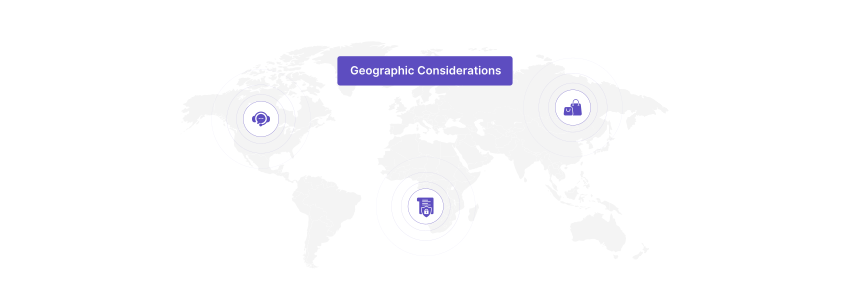
North American Market:
- Focus on performance and support quality
- Strong compliance requirements (PCI, SOX)
- Preference for domestic data centers
European Market:
- GDPR compliance critical
- Data residency requirements
- Growing sustainability focus
Asia-Pacific Region:
- Rapid e-commerce growth driving demand
- Mobile-first tuning priority
- Cost sensitivity with quality expectations
Future-Proofing Your Hosting Decision
1. Technology Roadmap Considerations
Magento Platform Evolution:
- Adobe Commerce Cloud integration expansion
- Better AI and machine learning features
- Progressive Web App tuning improvements
- B2B commerce feature improvements
Hosting Technology Advances:
- Serverless computing integration
- Container-based deployment options
- Advanced CDN and edge computing features
- Quantum-resistant security setups
2. Scalability Planning
Growth Accommodation Strategies:
- Choose providers with seamless upgrade paths
- Plan for international expansion requirements
- Consider multi-channel integration needs
- Prepare for mobile commerce growth
Performance Tuning Timeline:
- Immediate: Basic caching and CDN setup
- 3-6 months: Advanced performance tuning and monitoring
- 6-12 months: Scalability testing and tuning
- Annual: Performance and security audits
Frequently Asked Questions
1. What makes Magento hosting different from regular web hosting?
Magento hosting includes specialized server configurations, advanced caching layers (Varnish, Redis), specific PHP requirements, and expert support familiar with e-commerce complexities. Regular hosting lacks these e-commerce-specific optimizations and expertise.
2. How much should I budget for quality Magento hosting?
Expect $25-200+ monthly for managed Magento hosting, depending on traffic volume and features. While more expensive than generic hosting, specialized hosting prevents costly downtime and performance issues that can cost thousands per incident.
3. Can I migrate my existing Magento store without downtime?
Yes, experienced Magento hosting providers offer migration services with minimal to zero downtime using staging environments and careful DNS transitions. Plan migrations during low-traffic periods for additional safety.
4. What's the minimum server requirements for Magento?
Production Magento stores require minimum 4GB RAM, SSD storage, recent PHP versions with specific extensions, and MySQL optimization. However, traffic volume and store complexity often demand significantly higher resources.
5. How important is geographic server location?
Server location significantly impacts loading speeds for your primary audience. Choose data centers close to your main customer base, or use CDN services for global reach. European stores should consider GDPR compliance requirements for data residency.
6. What support response time should I expect?
Quality Magento hosting providers offer 15-minute response times for critical issues, with 24/7 availability. Avoid providers with generic support or offshore teams unfamiliar with Magento-specific problems.
Voice Search Questions
1. "What's the best Magento hosting for small businesses?"
SiteGround and Cloudways offer excellent value for growing businesses with user-friendly management and solid performance at reasonable prices.
2. "How much does enterprise Magento hosting cost?"
Enterprise solutions range from $500-5000+ monthly depending on traffic, features, and SLA requirements, with providers like Liquid Web and Nexcess leading this market.
Summary
Your choice of User related Magento hosting support providers will impact your e-commerce success in 2025 and beyond.
Next Steps
- Immediate (This Week): Create a detailed requirements assessment and hosting provider shortlist
- Short-term (This Month): Test potential providers using trials or staging environments
- Long-term (Next Quarter): Implement chosen solution with comprehensive monitoring and backup strategies
Remember that the "best" hosting provider is the one that aligns with your specific requirements, budget, and growth plans. Make informed descisions with Managed Magento Hosting.

Shivendra has over ten years of experience creating compelling content on Magento-related topics. With a focus on the Magento community, he shares valuable tips and up-to-date trends that provide actionable insights.