GoDaddy eCommerce Hosting vs MGT-Commerce Managed Hosting
[Updated: March 23, 2026]
GoDaddy's ecommerce hosting runs on WooCommerce. MGT-Commerce runs on AWS and is built for Magento. These platforms serve different audiences, and picking the wrong one costs you performance, time, and revenue.
This comparison breaks down pricing, performance, and features so you can make the right hosting decision for your store.
Key Takeaways
- GoDaddy ecommerce hosting is a WooCommerce platform with built-in store templates and payment processing. It does not offer Magento hosting.
- MGT-Commerce provides managed Magento hosting on AWS with dedicated resources, Varnish Cache, Redis, and 24/7 monitoring.
- GoDaddy plans start at $5.99/month but renew at $9.99 to $34.99/month. MGT-Commerce starts at €149/month with full AWS infrastructure.
- GoDaddy averages 1.44-second page loads. MGT-Commerce achieves 0.3-second load times with its Magento-optimized stack.
- Choose GoDaddy for small WooCommerce stores on a budget. Choose MGT-Commerce if you run Magento.
Quick Answer
GoDaddy ecommerce hosting = a WooCommerce-based platform for small online stores with built-in templates and marketplace integrations. MGT-Commerce = managed Magento hosting on AWS with dedicated resources and a Magento-optimized server stack.
GoDaddy is right for: Small WooCommerce stores, beginners, WordPress users on a budget.
MGT-Commerce is right for: Magento store owners, high-traffic ecommerce sites, businesses needing dedicated server resources and expert Magento support.
What Is GoDaddy eCommerce Hosting?
GoDaddy's ecommerce hosting is a managed WooCommerce platform. It ships with a preinstalled version of WooCommerce, 25 premium extensions (valued at $2,000+/year), and built-in payment processing through GoDaddy Payments.
The platform includes:
- Store templates with drag-and-drop customization
- Integrated payments via GoDaddy Payments (2.7% + 30¢ per transaction)
- Marketplace integration with Amazon, eBay, Etsy, Google, and Walmart
- Inventory management and shipping tools
- SSL certificates included with all plans
GoDaddy ecommerce hosting does not support Magento. It is built on WordPress with WooCommerce. If you run a Magento store, GoDaddy's shared hosting plans are your only option, and those lack the server-level optimizations Magento requires. For a deeper look, read our GoDaddy Magento hosting analysis.
What Is MGT-Commerce Managed Hosting?
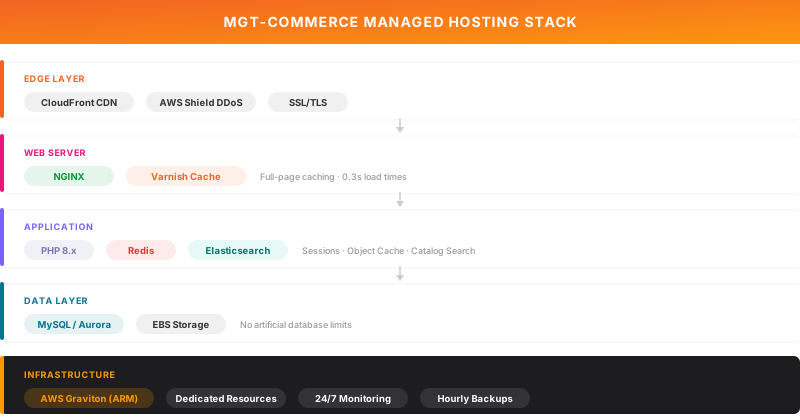
MGT-Commerce provides managed Magento hosting on AWS infrastructure. Every server is configured for Magento's specific requirements: Varnish Cache for full-page caching, Redis for session and object storage, Elasticsearch for catalog search, and NGINX as the web server.
The platform includes:
- Dedicated server resources (CPU, RAM, storage not shared with other users)
- AWS Graviton processors optimized for price and performance
- Hourly backups with fast restore capability
- DDoS protection via AWS Shield
- Free migration from any hosting provider (completed in 1 to 3 business days)
- 24/7 server monitoring with proactive issue detection
MGT-Commerce handles all server management: OS patches, security updates, firewall configuration, and performance tuning. Store owners focus on their business while the hosting team manages the infrastructure.
Feature Comparison: GoDaddy vs MGT-Commerce
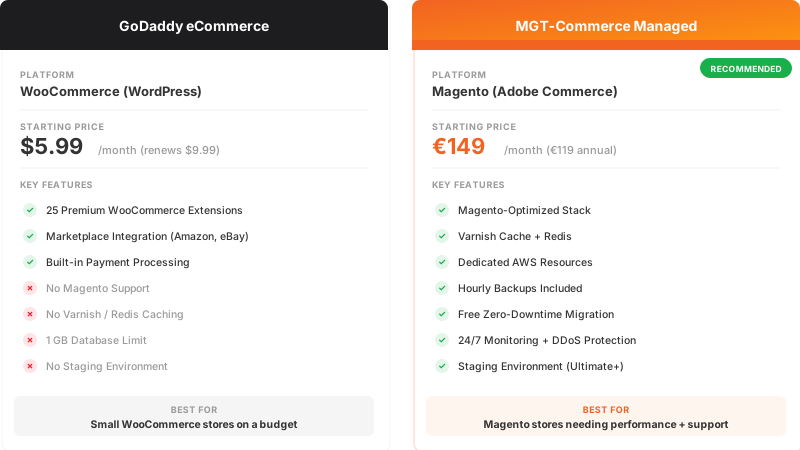
| Feature | GoDaddy eCommerce Hosting | MGT-Commerce |
|---|---|---|
| Platform | WooCommerce (WordPress) | Magento (Adobe Commerce) |
| Server Type | Shared hosting | Dedicated AWS instances |
| Caching | Basic server caching | Varnish + Redis |
| Database | 1 GB limit per database | No artificial limits |
| Uptime SLA | 99.9% | 99.95% (AWS SLA) |
| Avg. Load Time | 1.44 seconds | 0.3 seconds |
| SSL | Included | Included |
| Backups | Paid add-on (~$3/month) | Hourly backups included |
| Migration | Not included | Free, zero-downtime |
| DDoS Protection | Basic | AWS Shield included |
| Staging Environment | Not available | Included (Ultimate plan and above) |
| Support | General hosting support | Magento-specialized support |
| Auto-Scaling | Manual upgrades | Available on Multi-Server plans |
| CDN | Not included | Included (Enterprise plan) |
The core difference is platform specialization. GoDaddy optimizes for WordPress and WooCommerce. MGT-Commerce optimizes for Magento. Running Magento on GoDaddy's shared hosting means no Varnish, no Redis, and a 1 GB database cap. Large product catalogs will exceed that limit fast.
Pricing Comparison
GoDaddy Shared Hosting Plans (2026)
| Plan | Initial Price | Renewal Price | Storage | Websites |
|---|---|---|---|---|
| Economy | $5.99/month | $9.99/month | 25 GB | 1 |
| Deluxe | $7.99/month | $13.99/month | 50 GB | 10 |
| Ultimate | $12.99/month | $17.99/month | 75 GB | 25 |
| Maximum | $19.99/month | $34.99/month | 100 GB | 50 |
Initial prices require a 36-month commitment. Renewal prices increase 67 to 75%.
MGT-Commerce Managed Magento Plans (2026)
| Plan | Monthly | Annual (per month) | Domains | Support SLA |
|---|---|---|---|---|
| Premium | €149/month | €119/month | 1 | 8 hours |
| Ultimate | €199/month | €159/month | 2 | 4 hours |
| Enterprise | €249/month | €199/month | 5 | 2 hours |
AWS infrastructure costs (~€30 to €170/month) apply on top, based on traffic volume.
The price gap reflects what you get. GoDaddy's $5.99/month buys shared server space with basic tools. MGT-Commerce's €149/month buys a dedicated AWS server with a full Magento-optimized stack, expert support, and hourly backups. Review the full Magento hosting requirements to understand what your store needs before choosing a plan.
Performance: Why It Matters for Magento
Magento is resource-intensive. It requires more CPU, RAM, and database capacity than lightweight platforms like WooCommerce. Running Magento on hardware not designed for it results in slow page loads, timeout errors during checkout, and poor search performance.
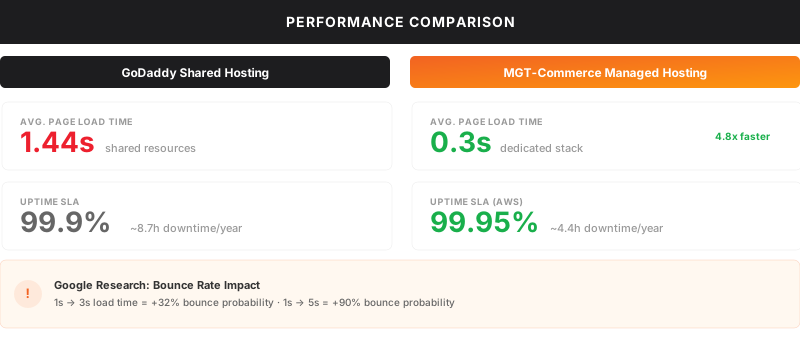
GoDaddy's shared hosting averages 1.44-second page loads for basic WordPress sites. Add Magento's overhead (catalog indexing, EAV database structure, extension processing) and load times climb higher. Shared server resources mean your store competes with other websites on the same machine.
MGT-Commerce delivers 0.3-second page loads through its optimized stack. Varnish Cache serves full pages from memory. Redis handles session storage and object caching. Dedicated CPU and RAM mean no resource competition. These are the components Magento was designed to run on, and they align with the official Magento system requirements.
Every second of load time impacts revenue. Research from Google shows that the probability of bounce increases 32% when page loads go from 1 to 3 seconds, and 90% from 1 to 5 seconds.
When to Choose GoDaddy
GoDaddy ecommerce hosting works well for:
- Small WooCommerce stores with fewer than 500 products
- Beginners who want drag-and-drop store building
- Budget-conscious startups testing their first online store
- WordPress users who want an integrated ecommerce solution
GoDaddy's built-in templates, marketplace integrations, and low entry price make it a solid choice for getting started with WooCommerce.
When to Choose MGT-Commerce
MGT-Commerce is the right choice for:
- Any Magento store (Open Source or Adobe Commerce)
- High-traffic stores processing 10,000+ monthly visitors
- Stores with large catalogs (1,000+ products with complex attributes)
- Businesses that need guaranteed uptime and fast support response
- International stores that benefit from AWS global infrastructure and CDN
If you run Magento on shared hosting, you leave performance on the table. Understand the risks of budget Magento hosting before committing to a low-cost plan. Magento demands server resources that shared environments cannot provide.
Pros and Cons
GoDaddy eCommerce Hosting
MGT-Commerce Managed Hosting
FAQ
Is GoDaddy good for Magento hosting?
GoDaddy does not offer Magento-specific hosting. Its ecommerce hosting runs on WooCommerce. You can run Magento on GoDaddy's shared hosting plans, but those lack Varnish Cache, Redis, and dedicated server resources that Magento requires for good performance.
How much does GoDaddy ecommerce hosting cost?
GoDaddy's shared hosting starts at $5.99/month on a 36-month term. Renewal prices range from $9.99 to $34.99/month depending on the plan. The ecommerce-specific WooCommerce hosting includes 25 premium extensions valued at over $2,000/year.
How much does MGT-Commerce hosting cost?
MGT-Commerce plans start at €149/month (€119/month with annual billing). AWS infrastructure costs apply on top, ranging from about €30 to €170/month based on your store's traffic volume.
Can I migrate from GoDaddy to MGT-Commerce?
Yes. MGT-Commerce offers free migration from any hosting provider. Their team handles server setup, data transfer, testing, and DNS switch. Most migrations complete within 1 to 3 business days with zero downtime.
What is the uptime guarantee for each provider?
GoDaddy offers a 99.9% uptime SLA. MGT-Commerce provides a 99.95% uptime guarantee backed by the AWS Service Level Agreement.
Does GoDaddy support WooCommerce?
Yes. GoDaddy's ecommerce hosting is built on WooCommerce. It includes a preinstalled WooCommerce setup with 25 premium extensions, integrated payment processing, and marketplace selling tools for Amazon, eBay, and Etsy.
What caching does MGT-Commerce use?
MGT-Commerce uses Varnish Cache for full-page caching, Redis for session and object storage, and NGINX as the web server. This combination delivers page load times around 0.3 seconds for Magento stores.
Do I need managed hosting for Magento?
Magento requires more server resources and configuration than most ecommerce platforms. Managed hosting handles server optimization, security patching, backups, and monitoring so you can focus on running your store. For most Magento store owners without dedicated DevOps teams, managed hosting saves time and prevents downtime.
Conclusion
GoDaddy and MGT-Commerce serve different ecommerce platforms. GoDaddy builds its ecommerce hosting around WooCommerce with affordable pricing and beginner-friendly tools. MGT-Commerce builds its hosting around Magento with AWS infrastructure, dedicated resources, and a performance-optimized server stack.
If you run a small WooCommerce store on a budget, GoDaddy gets the job done. If you run Magento, explore MGT-Commerce hosting plans for the server environment your store was designed for.