Magento Fulfillment: How Does it Work?
[Updated: March 10, 2026]
Orders placed. Now what? The gap between checkout and doorstep is where Magento stores build loyalty or lose customers.
This guide covers how Magento fulfillment works, from built-in tools like Multi-Source Inventory to third-party logistics (3PL) integration. You will learn which approach fits your store size and order volume.
Key Takeaways
- Magento fulfillment covers the full order journey from placement to delivery, with built-in tools for inventory, picking, packing, and shipping.
- Multi-Source Inventory (MSI) lets you manage stock across warehouses, stores, and distribution centers from one Magento admin panel.
- 3PL providers integrate with Magento through API connections and handle storage, picking, packing, and shipping on your behalf.
- Self-fulfillment works for stores processing under 100 orders per day. Beyond that, 3PL integration saves time and reduces errors.
- Server performance and hosting reliability affect order processing speed during high-traffic events like Black Friday.
What is Magento Fulfillment?
Magento fulfillment = the complete process of receiving, processing, and delivering orders placed on a Magento store. It includes inventory management, order routing, picking, packing, shipping, and tracking.
Works best for: Online stores needing multi-warehouse support, omnichannel retailers, and high-volume ecommerce operations.
Consider alternatives if: You ship fewer than 10 orders per week and handle everything from one location.
Magento fulfillment connects your storefront to your warehouse operations. When a customer places an order, Magento triggers a sequence: verify inventory, reserve stock, route the order to the right fulfillment location, and initiate the picking and packing process.
Adobe Commerce 2.4.8 includes Multi-Source Inventory (MSI) as a core module. Every Magento store has access to multi-warehouse fulfillment without third-party extensions. For stores that outgrow in-house operations, 3PL providers plug into Magento through API integrations.
How the Magento Order Fulfillment Process Works
Every Magento order follows seven steps from checkout to delivery.
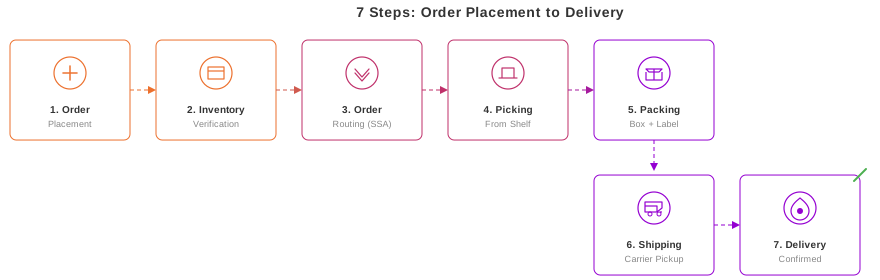
1. Order Placement The customer completes checkout. Magento creates an order record with all line items, shipping address, and payment confirmation.
2. Inventory Verification Magento checks stock availability across all connected sources. The Multi-Source Inventory system calculates salable quantity by subtracting reservations from physical stock.
3. Order Routing The Source Selection Algorithm (SSA) determines which warehouse or store fulfills the order. Default routing uses priority-based logic. You can customize this to optimize for proximity, cost, or stock levels.
4. Picking Warehouse staff or 3PL partners retrieve items from shelves. Magento updates the order status to "processing" and generates pick lists.
5. Packing Items are packaged for shipment. Packing slips and shipping labels are generated through Magento or your integrated shipping carrier.
6. Shipping The package leaves the warehouse. Magento records tracking numbers and sends shipment notifications to the customer. Integration with carriers like UPS, FedEx, DHL, and USPS happens through built-in shipping methods or extensions.
7. Delivery and Confirmation The customer receives the package. Magento marks the order as complete. Returns trigger the reverse logistics flow.
Built-in Magento Fulfillment Features
Magento 2.4.x ships with powerful fulfillment tools out of the box.
Multi-Source Inventory (MSI)
MSI is the backbone of Magento fulfillment. It lets you manage stock across multiple locations from one admin panel.
Core MSI capabilities:
- Multiple sources: Connect warehouses, retail stores, distribution centers, and drop-ship suppliers as inventory sources
- Stock aggregation: Salable quantity calculates across all sources, accounting for reservations and thresholds
- Source Selection Algorithm: Automates which source fulfills an order based on priority, distance, or custom rules
- Low stock notifications: Alerts when inventory at any source drops below your threshold
Order Management
The Magento admin panel provides a centralized order management dashboard for processing orders. You can view, filter, and manage orders by status, create shipments, generate invoices, and handle credit memos.
Adobe Commerce (the paid edition) extends this with advanced features: rule-based order routing, automated fraud screening, and B2B order workflows.
In-Store Pickup
Magento supports Buy Online, Pick Up In Store (BOPIS). Customers select a pickup location at checkout. Store staff receive the order, prepare it, and notify the customer when it is ready.
Self-Fulfillment vs 3PL for Magento Stores
The right fulfillment approach depends on your order volume, product type, and growth trajectory.
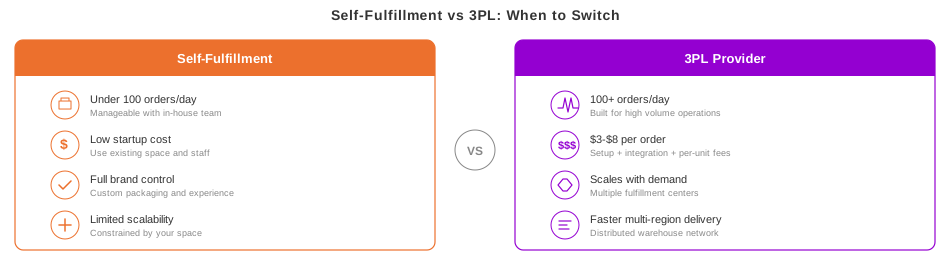
| Factor | Self-Fulfillment | 3PL Provider |
|---|---|---|
| Order volume | Under 100/day | 100+ orders/day |
| Startup cost | Low (use existing space) | Medium (setup + integration) |
| Per-order cost | Labor + materials | $3 to $8 per order + storage fees |
| Scalability | Limited by your space and staff | Scales with demand |
| Control | Full control over packing and branding | Less control, more standardized |
| Peak handling | Hire temporary staff | 3PL absorbs volume spikes |
| Geographic reach | Single location shipping | Multiple fulfillment centers |
When to stay in-house: You sell fragile, custom, or high-value products that need careful handling. Your brand experience depends on custom packaging. Your order volume stays consistent.
When to use 3PL: Your order volume grows beyond your warehouse capacity. You need faster delivery across multiple regions. You want to focus on marketing and product development instead of logistics.
How 3PL Integration Works with Magento
Third-party logistics providers connect to Magento through API integrations or dedicated extensions. The integration syncs inventory levels, pushes new orders to the 3PL warehouse, and pulls tracking information back into Magento.
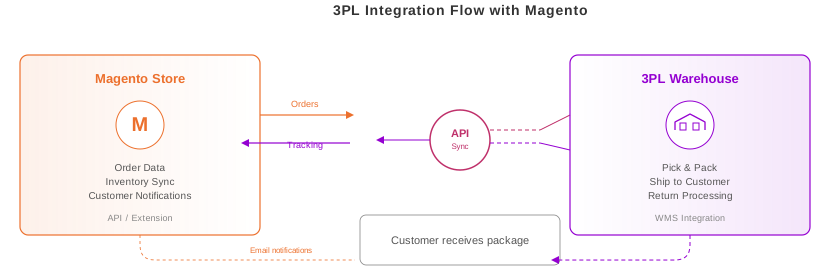
Typical 3PL integration flow:
- Customer places order on your Magento store
- Magento sends order data to the 3PL system via API
- 3PL warehouse picks, packs, and ships the order
- Tracking information syncs back to Magento
- Customer receives automated shipment notifications
Top 3PL Providers for Magento (2026)
| Provider | Magento Integration | Strengths | Approx. Cost/Order |
|---|---|---|---|
| ShipBob | Native extension, real-time inventory sync | 50+ fulfillment centers, 2-day shipping network, strong DTC focus | $5 to $7 + storage |
| ShipMonk | API + extension | Automated workflows, B2C and subscription box support | $3 to $5 + storage |
| Red Stag Fulfillment | API integration | Heavy/oversized items, low error rate guarantee | $4 to $8 + storage |
| Fulfillment by Amazon (FBA) | Multi-channel fulfillment via API | Massive warehouse network, Prime badge eligibility | $3 to $6 + FBA fees |
| ShipHero | REST API | WMS + 3PL hybrid, good for brands running own warehouse | $5 to $7 + storage |
Costs are approximate and vary by product size, weight, and monthly volume. Most providers offer volume discounts above 1,000 orders/month. Request quotes for accurate pricing.
Note: Deliverr was acquired and integrated into Flexport/Amazon in 2024. If you used Deliverr, migration to ShipBob or FBA Multi-Channel Fulfillment covers similar capabilities.
For a detailed comparison of fulfillment service providers compatible with Magento, check our dedicated guide.
Fulfillment Automation in Magento
Automation reduces manual work and errors in your fulfillment process.
What you can automate:
- Order routing: The Source Selection Algorithm routes orders to the optimal warehouse without manual intervention
- Status updates: Magento sends email notifications at each fulfillment stage (order confirmed, shipped, delivered)
- Invoice generation: Auto-generate invoices when orders ship
- Low stock alerts: Trigger reorder notifications when inventory drops below threshold
- Returns processing: RMA (Return Merchandise Authorization) workflows automate return labels and refund processing
Third-party extensions add barcode scanning for warehouse operations, batch shipment processing, and integration with warehouse management systems (WMS). Dozens of shipping and logistics extensions on the Adobe Commerce Marketplace plug into your fulfillment workflow.
Dropshipping as a Fulfillment Model
Dropshipping is a fulfillment model where your supplier ships products to customers on your behalf. You never hold inventory.
Magento supports dropshipping through MSI by adding suppliers as inventory "Sources." When an order comes in, MSI routes it to the supplier source. The supplier picks, packs, and ships it. Tracking data syncs back to your Magento store.
For automated supplier sync (inventory updates, order forwarding, tracking import), extensions like Webkul Dropship or Unirgy uDropship on the Adobe Commerce Marketplace handle the heavy lifting. These extensions connect to supplier feeds and keep stock levels current without manual updates.
How Hosting Affects Fulfillment Performance
Your hosting infrastructure has a direct impact on order processing speed and reliability.
During peak traffic events like Black Friday or flash sales, order volume can spike 10x. A server that handles 50 orders per minute under normal load needs to handle 500 during peaks. Without auto-scaling, orders queue up, timeouts increase, and customers abandon carts.
Key hosting factors for fulfillment:
- Server response time: Faster servers mean faster order creation, inventory checks, and payment processing. With Varnish full-page cache, Magento pages load up to 250x faster than uncached requests.
- Database performance: MSI queries across multiple sources require optimized MySQL/MariaDB configurations. Dedicated database instances prevent order processing from competing with catalog queries.
- Auto-scaling: Managed Magento hosting on AWS with auto-scaling provisions additional server instances during traffic spikes. Order processing stays fast even at 10x normal volume.
- Uptime: Every minute of downtime during a sale means lost orders. Enterprise hosting targets 99.99% uptime with multi-AZ redundancy.
- Server management: An integrated control panel like CloudPanel handles PHP, Nginx, SSL, and database configuration. Your team focuses on fulfillment operations instead of server administration.
A slow server adds seconds to every order. Multiply that across thousands of orders per day and the impact on customer satisfaction and store scalability becomes clear.
FAQ
What is Magento fulfillment?
Magento fulfillment is the process of receiving, picking, packing, shipping, and delivering orders placed on a Magento ecommerce store. It includes inventory management, order routing, and carrier integration.
Does Magento have built-in fulfillment features?
Yes. Magento 2.4.x includes Multi-Source Inventory (MSI) for managing stock across multiple warehouses, Source Selection Algorithm for automated order routing, and native integration with shipping carriers like UPS, FedEx, and USPS.
What is the difference between self-fulfillment and 3PL?
Self-fulfillment means you store, pick, pack, and ship orders from your own warehouse. 3PL (third-party logistics) means you outsource these operations to a fulfillment provider who handles them on your behalf.
How much does 3PL fulfillment cost for Magento stores?
3PL pricing varies by provider and volume. Expect $3 to $8 per order for standard pick-and-pack, plus monthly storage fees based on warehouse space used. Most providers offer volume discounts above 1,000 orders/month. Request quotes from at least three providers to compare total costs.
Can I use multiple warehouses with Magento?
Yes. Multi-Source Inventory (MSI) in Magento 2.4.x lets you connect multiple warehouses, retail stores, and distribution centers. The Source Selection Algorithm determines which location fulfills each order.
What 3PL providers integrate with Magento?
ShipBob (native extension with real-time sync), ShipMonk, Red Stag Fulfillment, ShipHero, and Fulfillment by Amazon (FBA) are among the top options in 2026. Most offer dedicated Magento extensions or API-based integration.
How does Magento handle fulfillment during peak sales?
Magento routes orders to available sources using the Source Selection Algorithm. The bottleneck is server capacity. Managed hosting with auto-scaling handles traffic spikes without order processing delays.
Is dropshipping a form of Magento fulfillment?
Yes. Dropshipping is a fulfillment model where your supplier ships products to customers on your behalf. Magento supports dropshipping through MSI by adding suppliers as inventory sources. Extensions like Webkul Dropship automate supplier sync, order forwarding, and tracking import.
What is the Source Selection Algorithm in Magento?
The Source Selection Algorithm (SSA) is a built-in feature that determines which inventory source fulfills an order. The default algorithm uses priority-based routing. You can customize it to optimize for shipping cost, proximity, or stock levels.
How does hosting impact Magento order processing?
Server speed affects how fast Magento creates orders, checks inventory, processes payments, and generates shipments. Slow hosting adds seconds to each step. During peak sales, this can cause timeouts and abandoned carts. Managed hosting with Varnish cache and auto-scaling keeps order processing fast under load.
Summary
Magento fulfillment gives store owners flexible options for order processing. Use Multi-Source Inventory for in-house operations across multiple warehouses. Integrate a 3PL provider when order volume exceeds your capacity. Automate order routing, status updates, and returns to reduce manual work.
The foundation of reliable fulfillment is infrastructure. Managed Magento hosting with auto-scaling keeps order processing fast during traffic spikes and ensures your fulfillment operations run without interruption.