10 Best Features of Magento 2 Enterprise Edition (EE)

[Updated on May 19, 2025] Is your eCommerce platform slowing growth? Magento 2 Enterprise Edition offers growth, safety, and customization. It suits all medium and large businesses.
This article lists the top 10 features of Magento Enterprise Edition. It shows its benefits for growing online stores and businesses.
Key Takeaways
-
Elasticsearch delivers fast, correct search results.
-
Page Builder makes content creation easy without coding.
-
B2B tools make complex deals simple.
-
Customization boosts engagement and sales.
-
Growth ensures performance during traffic spikes.
Magento 2 Enterprise Edition: Definition
Adobe Commerce, or Magento 2 Enterprise, is an eCommerce platform for high-traffic websites. Magento 2 EE handles large product catalogs and supports global expansion with ease. You get dedicated support and cloud hosting for reliability. It's designed for businesses needing advanced functionality.
Key Functionalities Include:
-
Customized shopping experiences boost engagement.
-
Strong B2B tools simplify bulk deals.
-
AI-driven suggestions improve product discovery.
-
Smooth connections link third-party systems.
The platform connects with payment gateways. It syncs with ERP systems for efficiency. Developers can customize storefronts to reflect brand identity. The platform's modular design supports complex online stores.
Magento 2 Enterprise Edition: Top 10 Features
1. Improved Search Capabilities
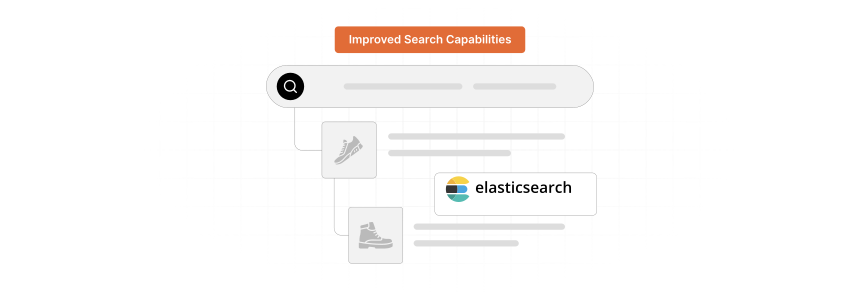
Magento Enterprise delivers strong search functionality. Elasticsearch powers fast and clear customer searches.
Key Capabilities:
-
Elasticsearch ensures quick, correct results.
-
Automatic suggestions fix misspelled searches.
-
Search highlighting aids product discovery.
-
Multilingual searches handle complex queries.
-
Location-based functionality improves results.
Business Benefits:
Improved search speeds up product discovery. Sales rates improve as a result. Elasticsearch provides autocomplete for faster searches. Smart corrections fix user errors. Customers can filter by product features. It creates a smooth search experience, encouraging purchases.
Example:
Customers searching for "blue sneakers" receive instant suggestions. Misspelled searches like "sneekers" return correct results. Businesses enjoy higher engagement. Shoppers find products without frustration.
2. Easy Content Management with Page Builder
Magento 2 Enterprise Edition includes a powerful content management system. Page Builder supports simple content creation.
Key Capabilities:
-
Drag-and-drop tools make content editing easy.
-
Dynamic blocks support scheduled updates.
-
Preview options test content before launch.
-
Multi-language support expands global reach.
-
Page structure organizes content layout.
Business Benefits:
Page Builder enables non-technical teams to create pages. They don't need coding skills. Marketing teams can update storefronts on their own. It reduces reliance on IT resources. Content creation becomes faster. Engaging storefronts attract more customers.
Example:
A retailer can create promotional landing pages in hours, not weeks. Marketing staff can drag product carousels and banners without needing a developer. They can preview layouts before publishing and schedule content for future promotions. Professional pages boost conversion rates. The time to market for new collections also drops.
3. B2B-Specific Features and Functionality
Magento 2 Enterprise Edition offers strong B2B tools. These features simplify business-to-business deals.
Key Capabilities:
-
Company accounts manage many user roles.
-
Shared catalogs provide customer-specific pricing.
-
Negotiable quotes speed up deal closures.
-
Requisition lists simplify repeat orders.
-
Company credit tracks payment terms.
-
Approval rules have control over the order flow management.
Business Benefits:
B2B tools improve purchasing efficiency. Complex relationships become manageable. Shared catalogs ensure custom pricing. Quick order forms speed up bulk purchases. Negotiable quotes build stronger client partnerships.
Example:
A commercial equipment supplier offers tiered pricing for corporate clients. Purchasing managers submit orders that need executive approval for large purchases. Regular customers use requisition lists to reorder standard supplies each month. Quote negotiations occur online, saving sales staff time. Order accuracy improves, which strengthens business relationships.
4. Customer Grouping and Customization
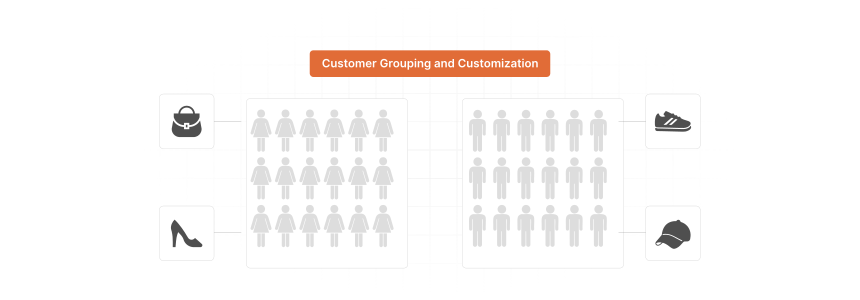
Magento 2 Enterprise Edition excels in customizing shopping experiences. Tools use customer data for tailored interactions.
Key Capabilities:
-
Grouping uses attributes and order history.
-
Customized promotions target specific groups.
-
Dynamic suggestions offer relevant products.
-
Behavioral data drives marketing campaigns.
-
AI powers real-time customization.
Business Benefits:
Customization boosts engagement. Sales rates rise with targeted content. Shoppers receive relevant product suggestions. It creates unique experiences, building loyalty.
Example:
A furniture store segments customers based on what they buy and how they browse. First-time homebuyers get tailored room package suggestions. Customers looking at leather sofas also see matching ottomans and care products. Repeat customers enjoy personalised discounts on items they've viewed before. Engagement improves with relevant recommendations, helping to strengthen customer relationships.
5. Improved Merchandising and Marketing Tools
Magento 2 Enterprise Edition provides strong merchandising tools. Marketing features maximize sales opportunities.
Key Capabilities:
-
A visual merchandiser arranges products in a clear way.
-
Related product rules automate cross-selling.
-
Email reminders recover abandoned carts.
-
Gift cards improve customer gifting options.
-
Loyalty programs reward repeat shoppers.
-
Private sales create exclusive events.
Business Benefits:
Merchants control product displays with precision. Cross-selling boosts average order values. Automated emails re-engage hesitant shoppers. Loyalty programs encourage long-term relationships.
Example:
A sporting goods retailer displays seasonal equipment with visual merchandising tools. Tennis rackets show compatible strings and grips. Abandoned cart emails help recover lost sales. Loyalty program members earn bonus points during their birthday month. Customer lifetime value rises through smart cross-selling and targeted offers.
6. Improved Growth and Performance
Magento 2 Enterprise Edition handles high traffic volumes. It ensures performance for growing businesses.
Key Capabilities:
-
Scaled design adjusts capacity as needed.
-
Background processing speeds up orders.
-
Message queuing manages many processes.
-
Optimized indexing boosts database performance.
-
Split databases handle large catalogs.
-
Monitoring tools track system health.
Business Benefits:
The platform maintains stability during traffic spikes. Seasonal promotions run without hassle. Performance stays predictable under pressure. Large catalogs load without delays.
Example:
An electronics retailer manages high traffic during holiday promotions without delays. Order processing runs without hassle, even with thousands of shoppers at once. Product catalog updates finish in no time instead of taking hours. The site stays responsive during flash sales with many visitors. Customer satisfaction grows because of fast performance, no matter the traffic volume.
7. Strong Safety Features
Safety remains a priority for eCommerce stores. Magento 2 Enterprise Edition protects customer and business data.
Key Capabilities:
-
PA-DSS certification ensures payment safety.
-
Regular patches fix weaknesses.
-
Admin controls limit unauthorized access.
-
Multi-factor authentication adds protection.
-
PCI compliance meets industry standards.
-
Dedicated support resolves safety issues.
Business Benefits:
Improved safety builds customer trust. Secure payment connections protect deals. Compliance with rules avoids penalties.
Example:
A health products retailer uses several security layers to protect customer data. Admin access needs two-factor authentication to block unauthorized entry. The team applies security patches as soon as they find vulnerabilities. Credit card information stays encrypted during transactions.
8. Multi-Store and Catalog Management

Magento 2 Enterprise Edition simplifies complex Magento product catalog management. Different storefronts operate from one admin panel.
Key Capabilities:
-
Many websites support diverse brands.
-
Advanced catalogs include category permissions.
-
Custom attributes improve product details.
-
Scheduled imports streamline data updates.
-
Multi-source inventory tracks stock levels.
-
Product tools optimize catalog organization.
Business Benefits:
Businesses manage different markets with ease. Global brands maintain consistency. Custom attributes meet specific needs. Inventory updates occur without disruption.
Example:
A global clothing brand runs US, European, and Asian stores from one dashboard. Product info updates are available in all regions at the same time. It includes the right currency and size conversions. Seasonal inventory moves between markets based on demand forecasts. Category structures adjust to local shopping habits. Centralized management boosts administrative efficiency.
9. Advanced Analytics and Reporting
Magento 2 Enterprise Edition provides strong analytics tools. Data-driven decisions improve business outcomes.
Key Capabilities:
-
Dashboards display key performance metrics.
-
Customer insights reveal shopping behaviors.
-
Sales analytics track order performance.
-
Inventory reports optimize stock levels.
-
Marketing tools measure campaign success.
-
Adobe Analytics connection deepens insights.
Business Benefits:
Analytics uncover customer trends. Sales performance informs strategies. Marketing campaigns gain clarity. Inventory management becomes precise.
Example:
A kitchenware retailer finds that cookware sets sell better with recipe guides. Sales reports show that slow-moving specialty items need promotions. Conversion funnel analysis shows that better checkout forms increase completion rates. Inventory forecasting helps prevent stockouts during busy cooking seasons. Data-driven decisions boost profit margins each quarter.
10. Connection with Adobe Experience Cloud
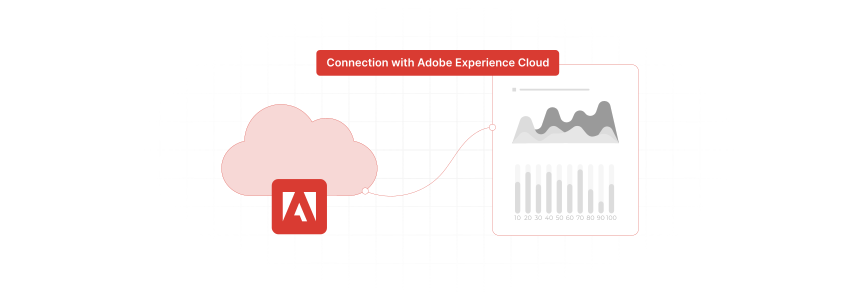
Adobe's ownership improves Magento 2 Enterprise Edition. Smooth connection with Adobe Experience Cloud elevates capabilities.
Key Capabilities:
-
Adobe Analytics provides advanced data insights.
-
Adobe Target customizes customer interactions.
-
Experience Manager streamlines content creation.
-
Unified profiles connect customer data.
-
Consistent touchpoints unify marketing efforts.
Business Benefits:
Connection creates cohesive customer experiences. Data insights inform strategies. Customization improves engagement. Content management becomes efficient.
Example:
A beauty products company links customer browsing with order history on different devices. Marketing campaigns target customers based on their past interactions across all channels. Content management syncs product descriptions across web, mobile, and email. Customer profiles combine data from all touchpoints for consistent personalization. Marketing efficiency increases with integrated insights from all channels.
Who Magento Enterprise Edition Is For
| Who Magento Enterprise Edition Is For | Why It Suits Their Needs |
|---|---|
| Large Retail Businesses | Magento Enterprise Edition handles high deal volumes and complex catalogs. It ensures performance during peak sales. - Elasticsearch powers fast product searches, boosting sales. - Cloud-native growth supports Black Friday traffic surges. - Page Builder creates engaging storefronts without coding. A retailer with thousands of products benefits from split databases. This setup maintains speed with large inventories. |
| B2B Companies | The platform streamlines business-to-business deals with strong tools. It manages complex client relationships. - Shared catalogs offer customer-specific pricing. - Negotiable quotes speed up deal closures. - Company accounts support many buyer roles. A wholesaler uses quick order forms for bulk purchases. Approval workflows ensure compliance and build trust. |
| Global Enterprises | Magento Enterprise Edition supports multi-store and multilingual operations. It simplifies international expansion. - Many storefronts manage diverse markets. - Localized payment options improve accessibility. - Multi-source inventory tracks global stock. A brand operating in Europe and Asia controls stores from one admin panel. This unified approach saves time. |
| Businesses Prioritizing Safety | The platform protects sensitive data with advanced safety features. It builds customer trust. - PA-DSS certification ensures secure payments. - Regular patches fix weaknesses. - Multi-factor authentication restricts admin access. A retailer handling credit card data uses PCI compliance. Bug bounty programs prevent breaches, ensuring safety. |
| Marketing-Driven Organizations | Magento Enterprise Edition improves marketing with customization and analytics. It drives customer engagement. - Customer grouping targets specific audiences. - Adobe Analytics connection refines campaign strategies. - Automated emails recover abandoned carts. A retailer tailors promotions based on order history. It boosts repeat purchases and loyalty. |
| Businesses Seeking Dedicated Support | The platform provides dedicated support for quick issue resolution. It ensures operational continuity. - Service-level agreements guarantee fast responses. - Adobe's global network addresses technical issues. - Dedicated teams assist during peak seasons. |
Magento Community Edition (CE) vs Enterprise Edition
| Feature | Magento Enterprise Edition (Adobe Commerce) | Magento 2 Open Source |
|---|---|---|
| Pricing | Starts at $22,000 per year, tiered by revenue. The pricing ranges from: $0-$1 million: $22,000/year $1-$5 million: $32,000/year $5-$10 million: $49,000/year $10-$25 million: $75,000/year $25-$50 million: $125,000/year | Free to download and use. |
| Target Audience | Large businesses with complex needs. | Small to medium businesses with technical resources. |
| Search Capabilities | Elasticsearch powers fast, multilingual searches. | Basic search supports Elasticsearch with a custom setup. |
| B2B Functionality | Includes company accounts, shared catalogs, and quotes. | Lacks native B2B tools; requires extensions. |
| Content Management | Page Builder enables drag-and-drop content creation. | Basic CMS, no native Page Builder. |
| Growth | Cloud-native design handles high traffic. | Scales with custom setup, less automated. |
| Safety Features | PA-DSS certification, PCI compliance, and regular patches. | Basic safety relies on manual updates. |
| Analytics | Advanced dashboards connect with Adobe Analytics. | Basic reporting needs third-party tools. |
| Support | Dedicated support with service-level agreements. | Community forums. It has no official support. |
| Adobe Connection | Smooth link to Adobe Experience Cloud. | No Adobe ecosystem connection. |
FAQs
1. Does Magento 2 Enterprise offer advanced features?
Magento 2 EE offers PCI compliance and B2B support. It includes enterprise cloud hosting. The Community Edition lacks dedicated support. Enterprise suits large stores needing strong performance. Safety features protect complex operations.
2. How does Magento 2 Enterprise improve customer experience?
The platform uses Elasticsearch for fast searches. Responsive design ensures device compatibility. Fast checkout reduces friction. Multi-level navigation simplifies browsing. These features boost satisfaction and sales.
3. Can Magento 2 Enterprise handle international eCommerce?
The platform supports many storefronts and languages. It manages diverse currencies. Multilingual content engages global customers. Localized payment options improve accessibility. These tools simplify expansion into international markets.
4. What safety features does Magento 2 Enterprise offer?
The platform ensures PCI compliance. It connects secure payment gateways. Regular scans detect weaknesses. Credit card tokenization protects data. Bug bounty programs address threats. These measures ensure safe deals and trust.
5. Can small businesses afford Magento EE?
Yes, Magento EE is affordable for small businesses. Its price starts at $22,000/year. Growth reduces long-term costs. Built-in tools reduce third-party expenses. Small businesses with high traffic benefit. Complex needs justify the investment.
Summary
Magento 2 Enterprise Edition powers medium to large businesses. It addresses complex eCommerce demands. Key benefits include:
-
Improved search improves product discovery.
-
B2B tools simplify bulk deals.
-
Customized marketing builds customer loyalty.
-
Secure payments build shopper confidence.
-
Flexible pricing supports growing stores.
Want scalable business solutions? Explore managed Magento hosting for your business needs.
[Updated on May 19, 2025]