10 Best Magento Websites: Top eCommerce Stores in 2026
[Updated: March 11, 2026]
Magento powers over 100,000 live stores worldwide. The brands on this list prove what the platform delivers at scale.
This guide covers 10 verified Magento websites with real revenue data, infrastructure details, and the metrics that set them apart.
Key Takeaways
- The 10 best Magento websites span fashion, automotive, electronics, luxury, and home decor, all powered by Adobe Commerce.
- PUMA generates $36.5 million per month in online revenue through its Magento-powered Progressive Web App.
- Helly Hansen runs 50+ international stores on Adobe Commerce Cloud with 35,000 products per store.
- Byredo became the first UK Magento 2 store and grew average order value by 160%.
- Cox & Cox increased revenue by 28.8% (45% on mobile) after migrating to Magento 2.
- Every brand on this list requires enterprise-grade hosting infrastructure to handle catalog size and traffic volume.
Quick Answer
Magento websites = ecommerce stores built on Adobe Commerce (Magento), the platform behind 100,000+ live stores and $155 billion in annual GMV. Top brands choose Magento for catalog flexibility, multi-store capabilities, and enterprise scalability.
Perfect for: Large catalogs (1,000+ SKUs), multi-region stores, brands needing full code control
Not ideal for: Small stores under 100 products, businesses without technical resources
The 10 Best Magento Websites in 2026
Magento powers some of the world's biggest online stores. The following Magento websites showcase what the platform delivers at enterprise scale.
1. PUMA
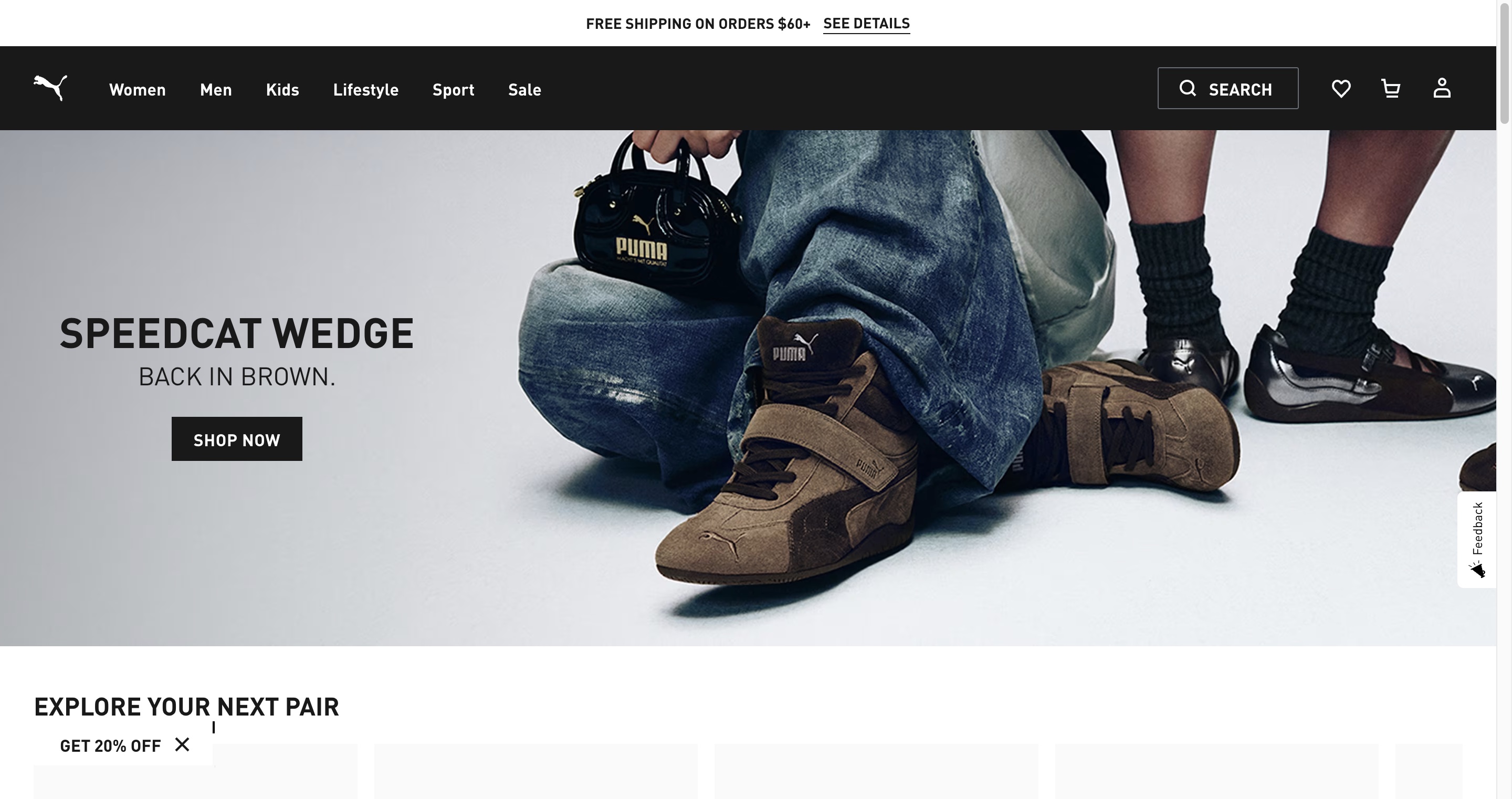
PUMA runs one of the highest-traffic Magento stores in the world. The brand generates $36.5 million per month in online revenue with 29.9 million monthly sessions and over 366,000 transactions.
PUMA built its store using ScandiPWA, a Progressive Web App framework for Magento 2. This delivers near-instant page loads on mobile and eliminates the lag of traditional page-based navigation.
What PUMA does with Magento:
- Progressive Web App (ScandiPWA) for app-like mobile experience
- Multi-region storefronts with localized pricing and shipping
- Advanced product filtering across thousands of SKUs
- Real-time inventory sync across global warehouses
Infrastructure note: A store processing 366,000+ monthly transactions needs auto-scaling hosting, dedicated database servers, and CDN distribution. PUMA's traffic spikes during product launches demand infrastructure that scales without manual intervention.
2. Helly Hansen
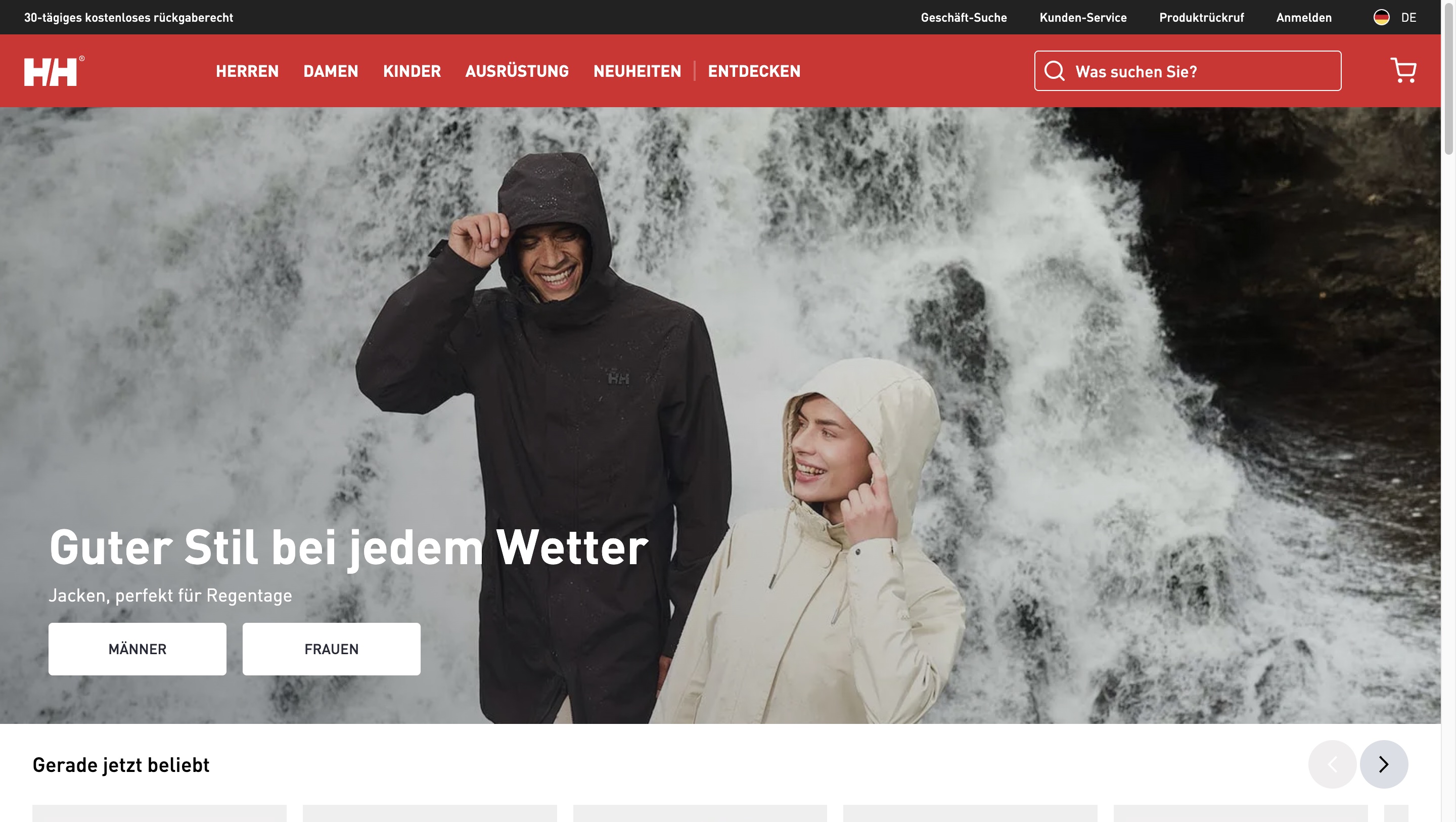
Helly Hansen operates 50+ online stores across 7 languages on Adobe Commerce Cloud. Each store manages 35,000 products with localized content, payment methods, and shipping rules.
The brand was the first customer to migrate to Magento 2 Commerce Cloud Edition in 2016. Since then, Helly Hansen has tripled its online business and achieved a 40% boost in sales revenue.
What Helly Hansen does with Magento:
- Multi-store architecture: 50+ storefronts from one backend
- Region-specific product availability and pricing
- Localized payment gateways and delivery rules
- Mobile-responsive design for outdoor gear browsing
Infrastructure note: Running 50+ stores from one Magento installation multiplies database queries, cache requirements, and session handling. Cloud hosting with elastic scaling is essential at this level.
3. Fred Perry
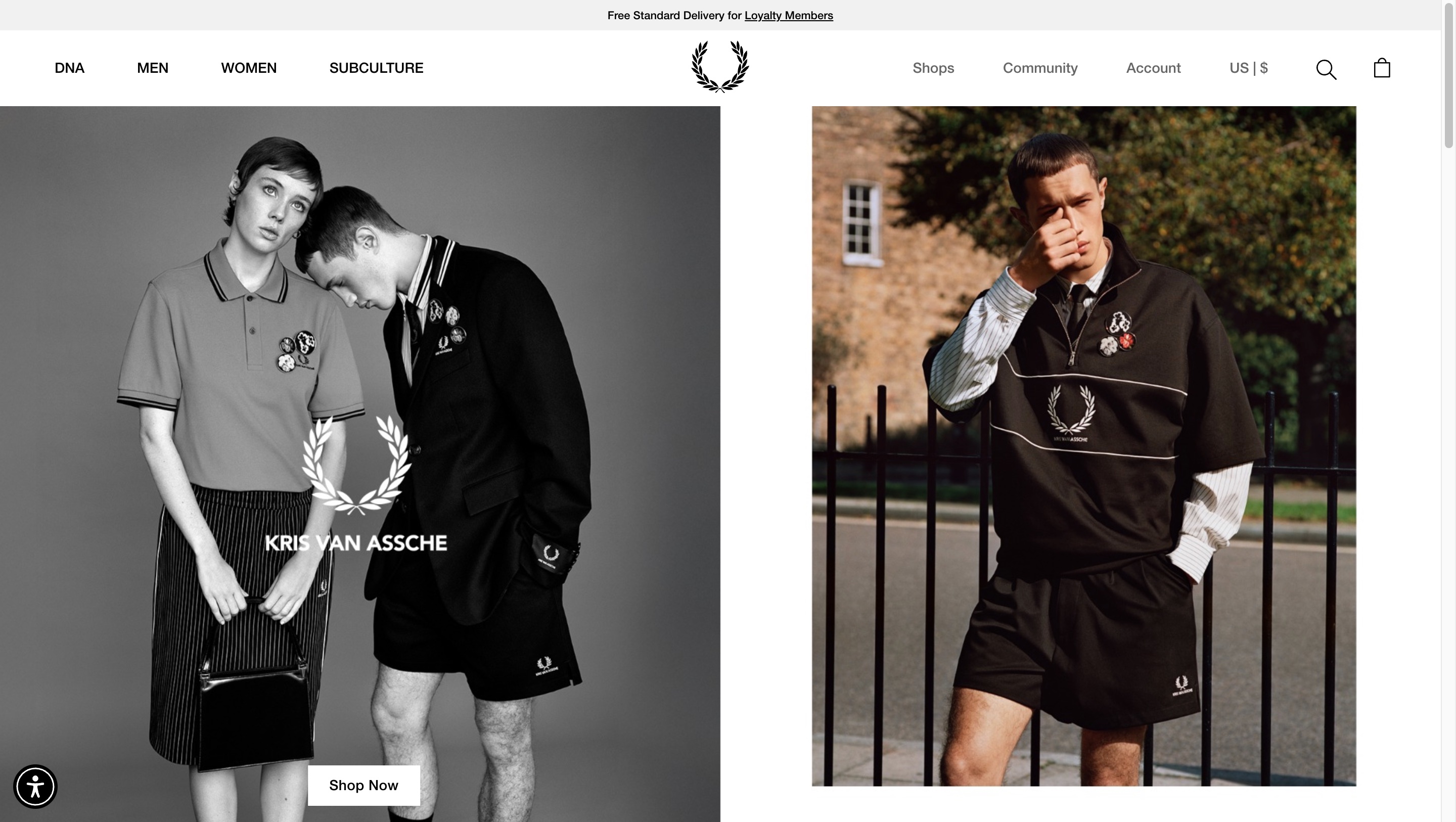
Fred Perry uses Adobe Commerce to manage its global ecommerce presence. The British brand has served customers across dozens of countries since 1952.
Magento gives Fred Perry full control over store customization, inventory management, and worldwide order processing.
What Fred Perry does with Magento:
- Full frontend customization matching brand identity
- Global inventory management across regions
- Multi-currency and multi-language support
- Consistent brand experience across all storefronts
4. Paul Smith
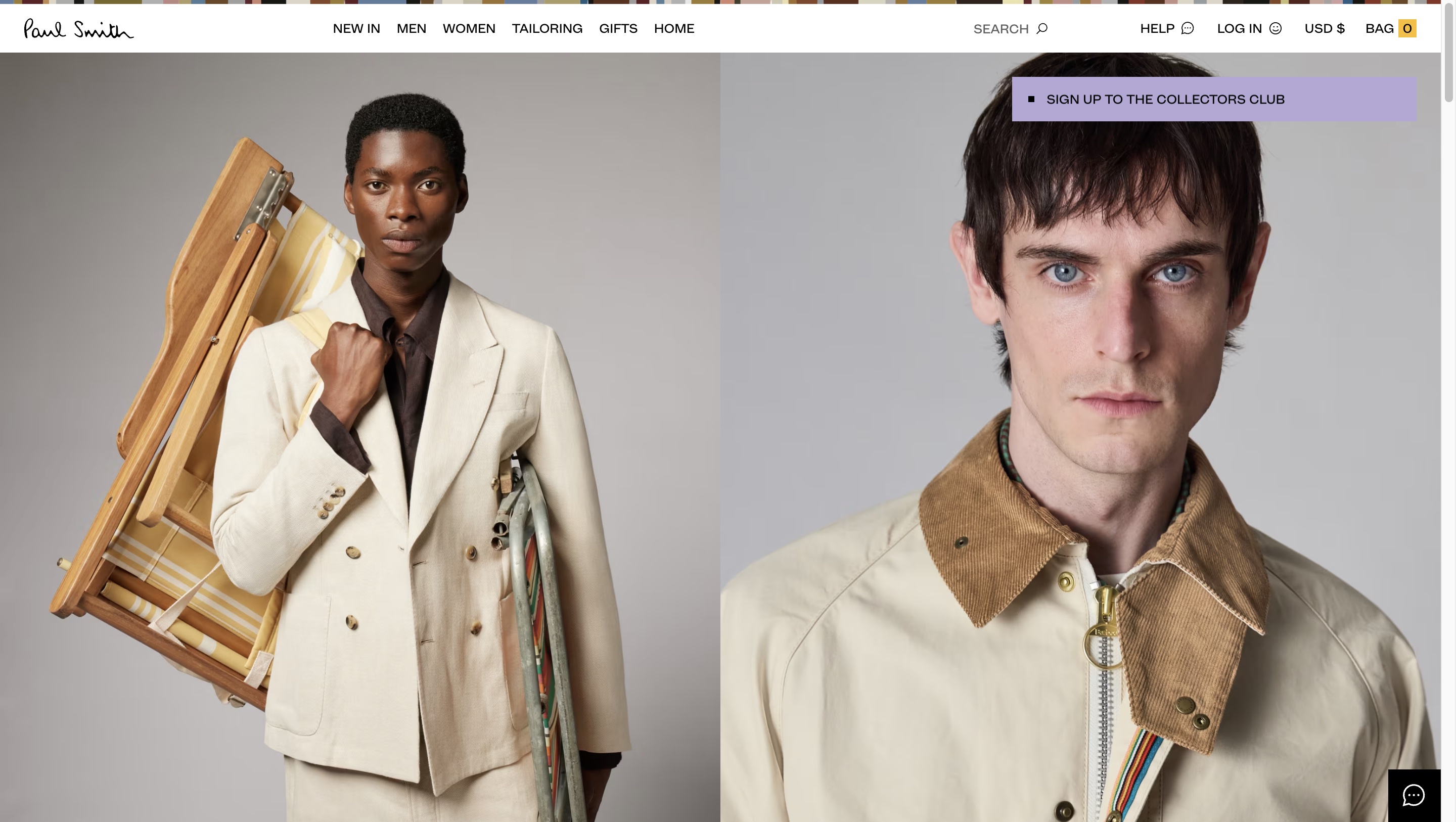
Paul Smith showcases an extensive fashion catalog across multiple languages using Magento 2 Commerce. The British designer brand has operated since 1970.
Magento's multi-language capabilities let Paul Smith serve diverse global customers while maintaining one admin backend.
What Paul Smith does with Magento:
- Multi-language storefront management
- Extensive product catalog organization
- Customer segmentation for personalized experiences
- Cross-selling and upselling automation
5. Ford
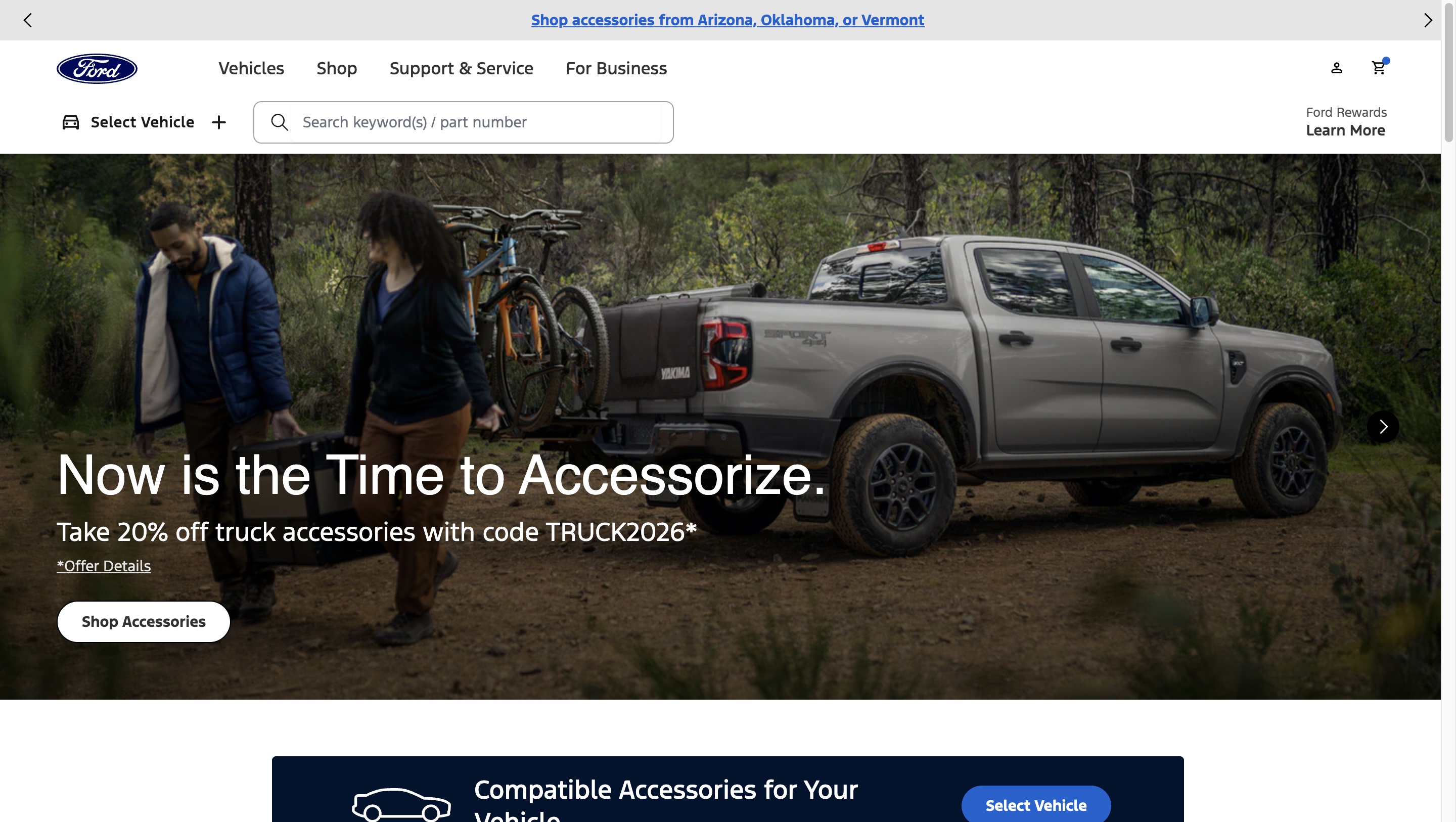
Ford runs its accessories ecommerce platform on Magento. The store features a vehicle-specific search system where customers select their car model, and the store filters accessories that fit their exact vehicle.
Ford also integrates the FordPass Rewards loyalty program. Car owners collect points for discounts on accessories through this Magento-powered integration.
What Ford does with Magento:
- Vehicle-specific product search and filtering
- FordPass Rewards loyalty program integration
- 360-degree product image viewing
- Global dealer network integration
Infrastructure note: Vehicle-specific search adds computational overhead. Each query cross-references product compatibility databases against thousands of vehicle configurations. This demands optimized database indexing and adequate server memory.
6. Land Rover
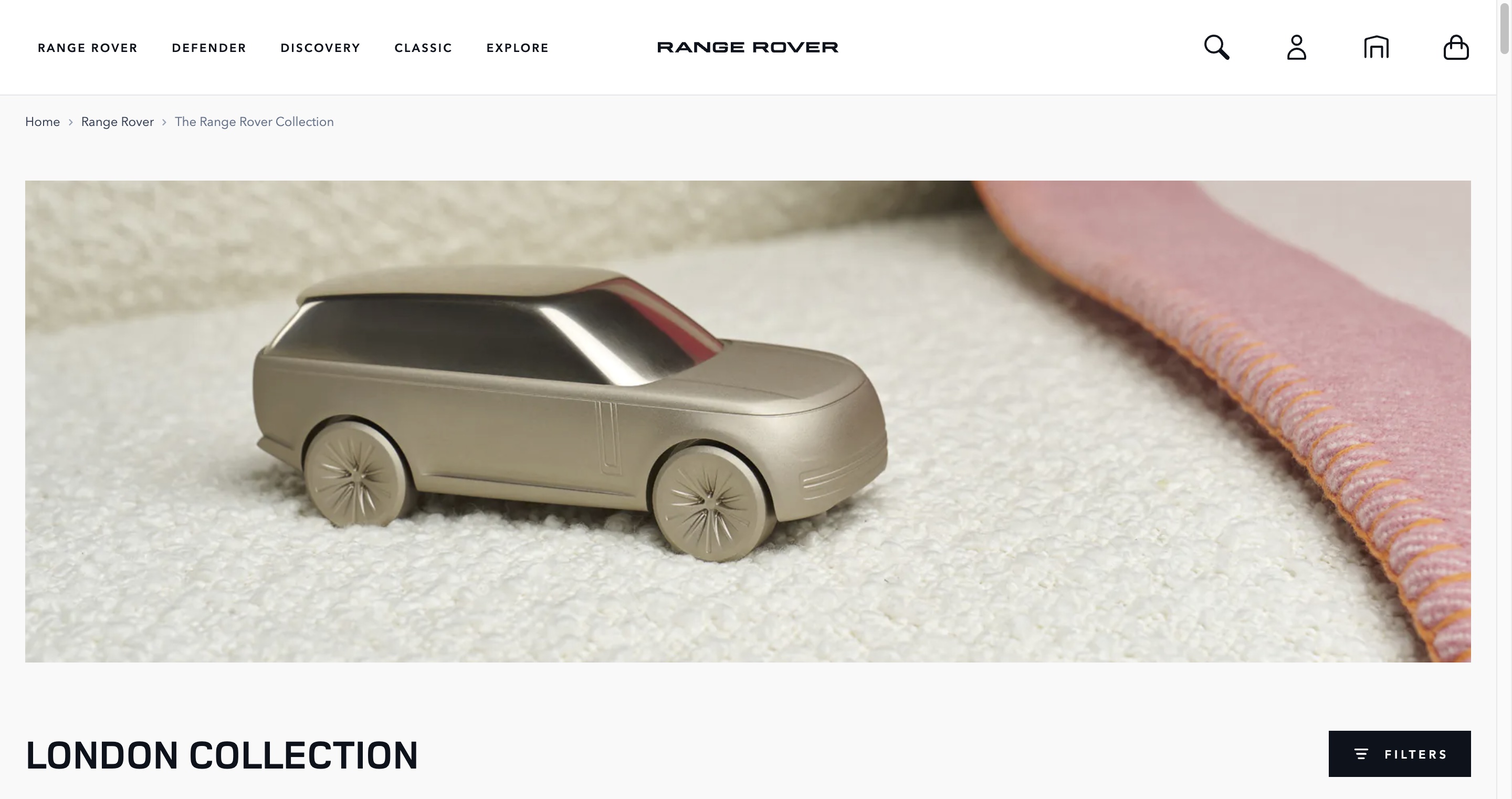
Land Rover sells branded merchandise and accessories through Magento 2 Commerce Cloud. The platform handles complex product catalogs with vehicle-specific filtering across its global dealer network.
What Land Rover does with Magento:
- Mobile-responsive design for browsing on the go
- Vehicle-based product filtering
- Global dealer network integration
- Multi-region inventory management
7. Canon
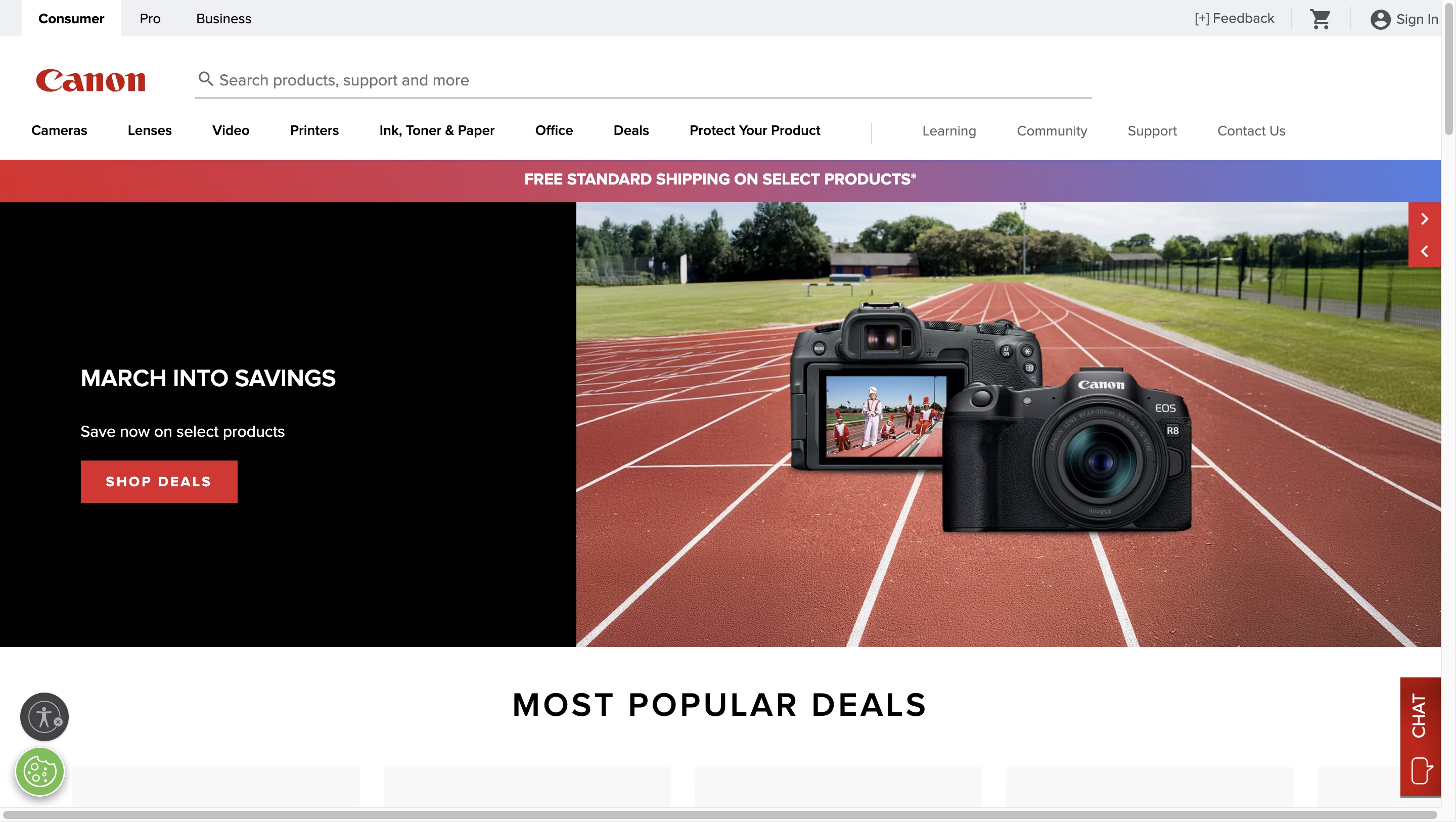
Canon uses Magento to power its store for cameras, lenses, printers, and medical equipment. The brand manages one of the most complex product catalogs in ecommerce, with thousands of products containing detailed technical specifications.
Canon leverages Magento's customer segmentation to deliver product recommendations based on purchase history and browsing behavior.
What Canon does with Magento:
- Comprehensive product catalog with technical specifications
- Customer segmentation for product recommendations
- Streamlined checkout for high-value electronics
- Combined B2B and B2C sales through one platform
8. Cox & Cox
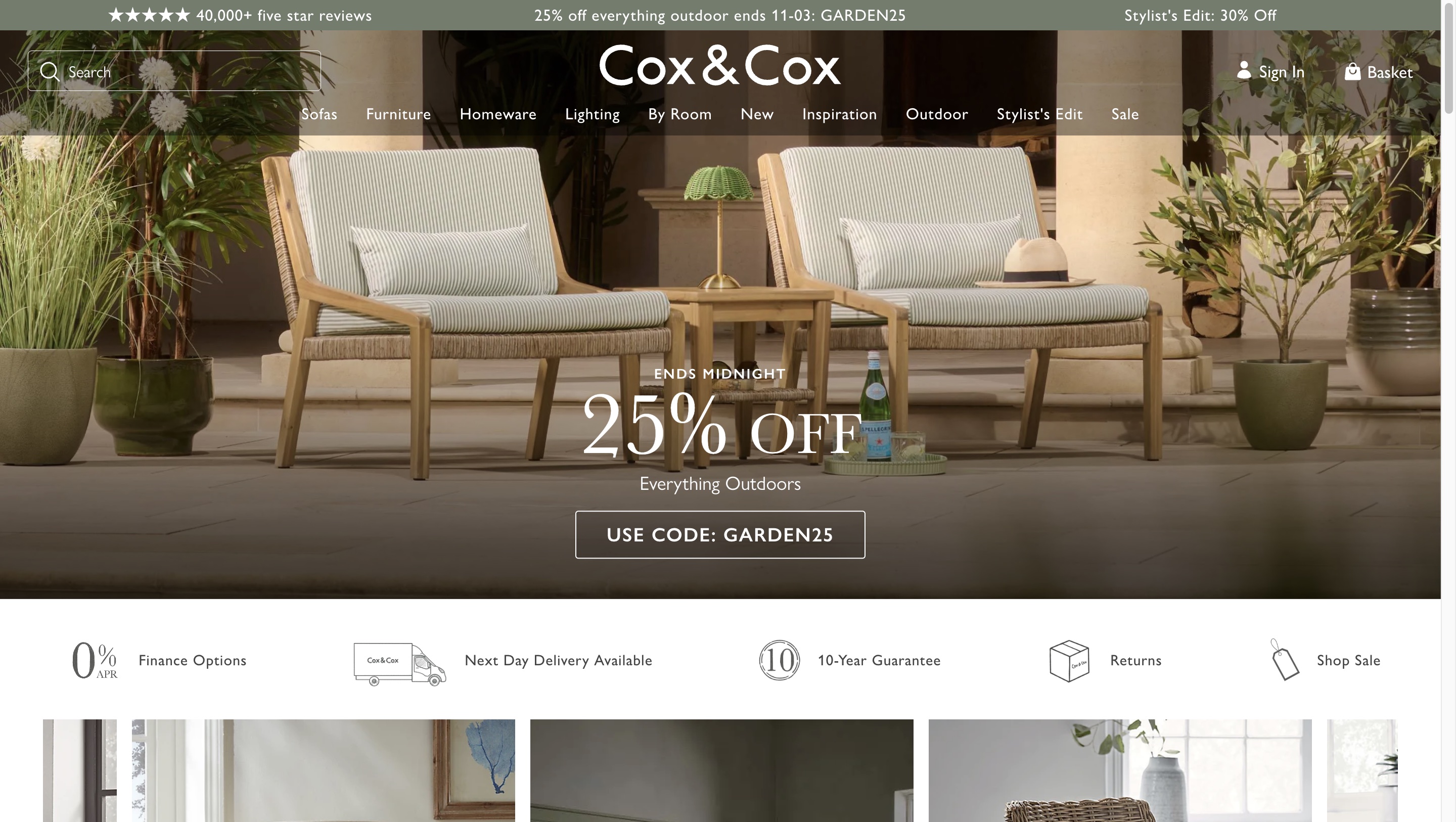
Cox & Cox is a pure-play ecommerce homeware company generating £14 million per year with 20% year-on-year growth. After migrating to Magento 2, the brand achieved:
- 28.8% increase in revenue (45% on mobile)
- 6.7% increase in conversion rate (20% on mobile)
Cox & Cox evaluated Hybris and Demandware before choosing Magento 2. The cost and implementation timescales of competing platforms made Magento the clear winner.
What Cox & Cox does with Magento:
- Full product catalog management for home and garden items
- Mobile-optimized browsing with responsive design
- Visual merchandising with image-rich product displays
- Customer analytics for targeted marketing
Infrastructure note: 20% year-on-year growth means Cox & Cox must plan for increasing traffic each year. Hosting that scales with the business prevents performance degradation as catalog size and visitor numbers grow.
9. Sigma Beauty
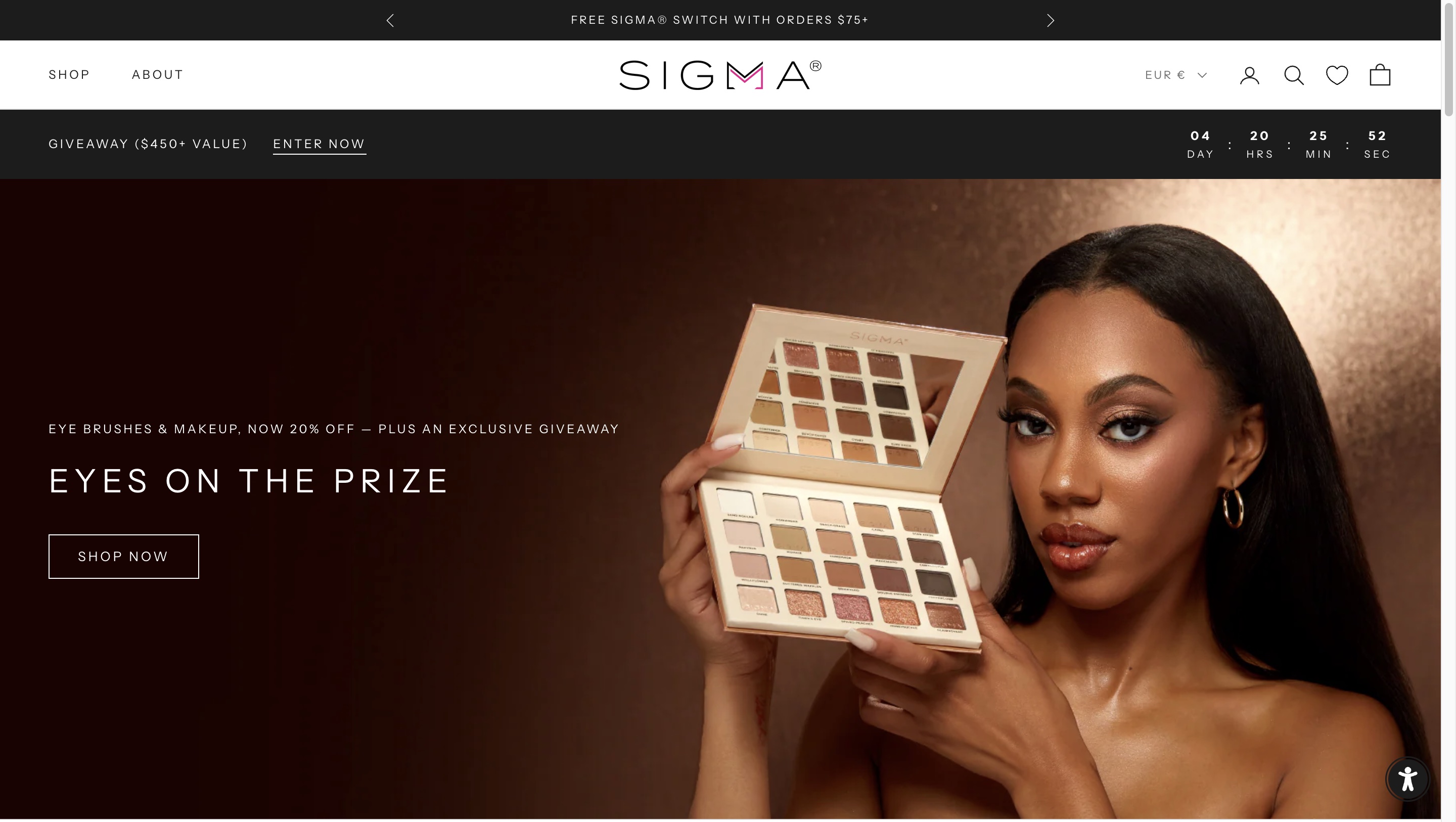
Sigma Beauty launched the world's first combined B2B and B2C site on Magento Commerce Cloud 2.2. The cosmetics brand serves 250+ retailers in 70+ countries and doubled its mobile sales within one year of migration.
What Sigma Beauty does with Magento:
- Combined B2B and B2C storefront from one installation
- Category-specific filters for beauty tools and makeup
- Quick add-on hover for color selection
- Social media platform integration
- Global distribution to 70+ countries
10. Byredo

Byredo became the first UK retailer to launch on Magento 2 in late 2015. The luxury fragrance brand achieved:
- 160% increase in average order value
- 30% increase in conversion rate
The Stockholm-based brand manages multiple regional storefronts from one backend, handling fragrances, leather goods, accessories, and beauty products.
What Byredo does with Magento:
- Multi-site management for regional storefronts
- Luxury-grade frontend design and UX
- Cross-sell and upsell automation
- Customer service integration tools
What Sets These Magento Stores Apart
Catalog Management at Scale
Every brand on this list manages hundreds to tens of thousands of SKUs. Magento's product attribute system, configurable products, and category management handle complex catalogs that simpler platforms cannot match.
Multi-Store Architecture
Helly Hansen runs 50+ stores. Paul Smith and Byredo serve customers in multiple languages. Magento's multi-store architecture lets brands manage all storefronts from one admin panel, one codebase, and one hosting environment.
Performance Optimization
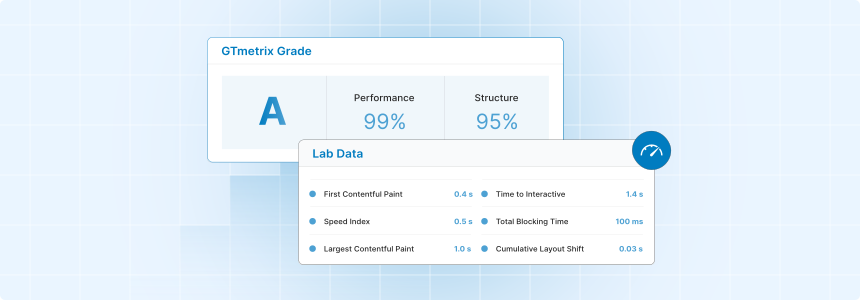
Page load speed separates successful Magento stores from abandoned ones. PUMA invests in PWA technology to deliver sub-second load times on mobile. Others rely on server-side caching, CDN distribution, and performance tuning to keep response times low.
A 1-second delay in page load can cut conversions by 7% to 20% (based on Google/Portent research). Every store on this list prioritizes speed.
Hosting Infrastructure
Magento requires more server resources than hosted platforms. A production store needs 24 to 32GB RAM as a minimum, dedicated database servers, and Redis or Varnish caching. Stores at PUMA or Helly Hansen scale need managed Magento hosting with auto-scaling, load balancing, and 24/7 monitoring.
The difference between a Magento store that converts and one that frustrates visitors comes down to infrastructure quality.
Open Source Code Control
Magento's open-source foundation gives brands full control over their code. Ford built a custom vehicle-specific search system. PUMA implemented ScandiPWA for a progressive web app experience. This level of customization requires development resources but delivers experiences that template-based platforms cannot replicate.
Magento Open Source vs Adobe Commerce
These 10 brands use different editions based on which version fits their business:
| Feature | Magento Open Source | Adobe Commerce |
|---|---|---|
| Cost | Free (hosting + dev costs) | License fee + hosting |
| B2B Features | Limited | Built-in (quotes, catalogs) |
| Cloud Hosting | Self-managed | Adobe Commerce Cloud option |
| Support | Community | Adobe enterprise support |
| Best For | Growing stores, custom builds | Enterprise, multi-store operations |
Most brands on this list run Adobe Commerce or Adobe Commerce Cloud. Helly Hansen and Land Rover use Commerce Cloud. Sigma Beauty uses Commerce Cloud 2.2. Byredo and Cox & Cox run Magento 2 Commerce.
Smaller brands building their Magento stores often start with Open Source and upgrade as they grow.
FAQ
What is the latest version of Magento?
The current version is Magento 2.4.8, released alongside Adobe Commerce 2.4.8. This version supports PHP 8.3, includes improved security patches, and delivers performance enhancements. Adobe has committed to supporting Magento Open Source through 2028.
How many websites use Magento?
Over 100,000 live stores run on Magento worldwide. The platform powers about 8% of global ecommerce and 20% of the top 1,000 US online retailers.
Is Magento free to use?
Magento Open Source is free to download and use. Costs come from hosting, development, extensions, and maintenance. Adobe Commerce (the enterprise edition) requires a license fee based on gross merchandise volume.
Can Magento handle large product catalogs?
Yes. Helly Hansen manages 35,000 products per store across 50+ storefronts. Canon runs thousands of products with detailed technical specifications. Magento supports catalogs with over 1 million SKUs when paired with proper hosting infrastructure.
What hosting does Magento need?
A production Magento store requires 24 to 32GB RAM as a minimum, SSD storage, PHP 8.2 or 8.3, and MySQL 8.0 or MariaDB 10.6. High-traffic stores also need Redis for session and cache storage, Varnish for full-page caching, and Elasticsearch or OpenSearch for catalog search.
Is Magento better than Shopify for large stores?
Magento offers more customization, open-source code access, and full hosting control. Shopify offers simpler setup and lower initial investment. Brands like PUMA and Ford chose Magento because they needed custom features (ScandiPWA, vehicle-specific search) that SaaS platforms do not support out of the box.
How much does it cost to run a Magento store?
Total cost depends on edition, hosting, development, and extensions. Magento Open Source stores with managed hosting run $200 to $1,000+ per month for hosting alone. Adobe Commerce Cloud licenses add $40,000 to $200,000+ per year depending on GMV. Development and maintenance costs vary by store complexity.
What is the future of Magento?
Adobe continues investing in both Magento Open Source and Adobe Commerce. Recent developments include headless commerce support, PWA Studio, GraphQL APIs, and integration with Adobe Experience Platform. The open-source community remains active with regular contributions and extensions.
How does Magento compare to WooCommerce for large stores?
Magento handles complex catalogs and multi-store setups better than WooCommerce. WooCommerce works well for small to medium stores built on WordPress. For stores with thousands of SKUs, multiple storefronts, or B2B requirements, Magento provides purpose-built features that WooCommerce lacks without heavy plugin reliance.
Which industries use Magento the most?
Fashion and apparel lead Magento adoption, followed by electronics, automotive, home goods, and beauty. B2B manufacturing and wholesale distributors also use Adobe Commerce for its built-in quote management and customer-specific pricing. The platform's flexibility makes it suitable for any industry with complex product catalogs.
Summary
These 10 Magento websites demonstrate what the platform delivers for serious ecommerce operations. From PUMA's $36.5M monthly revenue to Byredo's 160% AOV growth, the results speak for themselves.
Successful Magento stores share three things: a well-structured catalog, a fast frontend, and solid hosting infrastructure. The platform gives brands full control, but that control requires the right technical foundation.
Whether you run 100 products or 35,000 across 50 storefronts, Magento scales with your business. The question is whether your hosting scales with it. Explore hosting options built for Magento stores at any scale.