Magento Development Company For Customer-Centric Ecommerce
[Updated: January 22, 2026]
Choosing the right Magento development company can make or break your ecommerce project.
The market in 2026: Adobe Commerce powers 116,350 stores worldwide (down 11% from early 2025). Mid-market losses go to Shopify and BigCommerce, but Adobe Commerce remains strong in enterprise and B2B, where its AI tools and complex workflows justify higher costs.
This guide covers honest cost expectations (€25k–€250k+), agency evaluation tips, and the real challenges you'll face.
Key Takeaways
- How Adobe Commerce agencies help create customer-centric stores
- Realistic budgets: €25k–€250k+ depending on complexity
- Challenges: maintenance costs, PHP upgrades, security patches
- How to evaluate and choose the right development partner
Quick Answer: TL;DR
What does a Magento development company do? A Magento (Adobe Commerce) development company builds, customizes, and maintains ecommerce stores on the Magento platform. Services include custom theme development, extension integration, migration from other platforms, API development, and ongoing support. Top agencies in 2026 also specialize in headless commerce, PWA implementations, and AI powered personalization using Adobe Sensei.
How to choose the right agency: Look for Adobe certified developers, check their portfolio, and verify experience with your specific needs (B2B, B2C, marketplace). Realistic budgets in Europe (2026):
- €25,000–€50,000 for simple Magento Open Source stores with custom development and extensions
- €80,000–€200,000 for mid-sized projects (B2C/B2B, migrations, PWA)
- €250,000+ for enterprise implementations with complex integrations
These figures cover conception, design, development, and launch. They exclude ongoing maintenance, hosting, and Adobe Commerce licensing fees (starting at $22,000/year).
Brief overview of Adobe Commerce (Magento) as an ecommerce platform
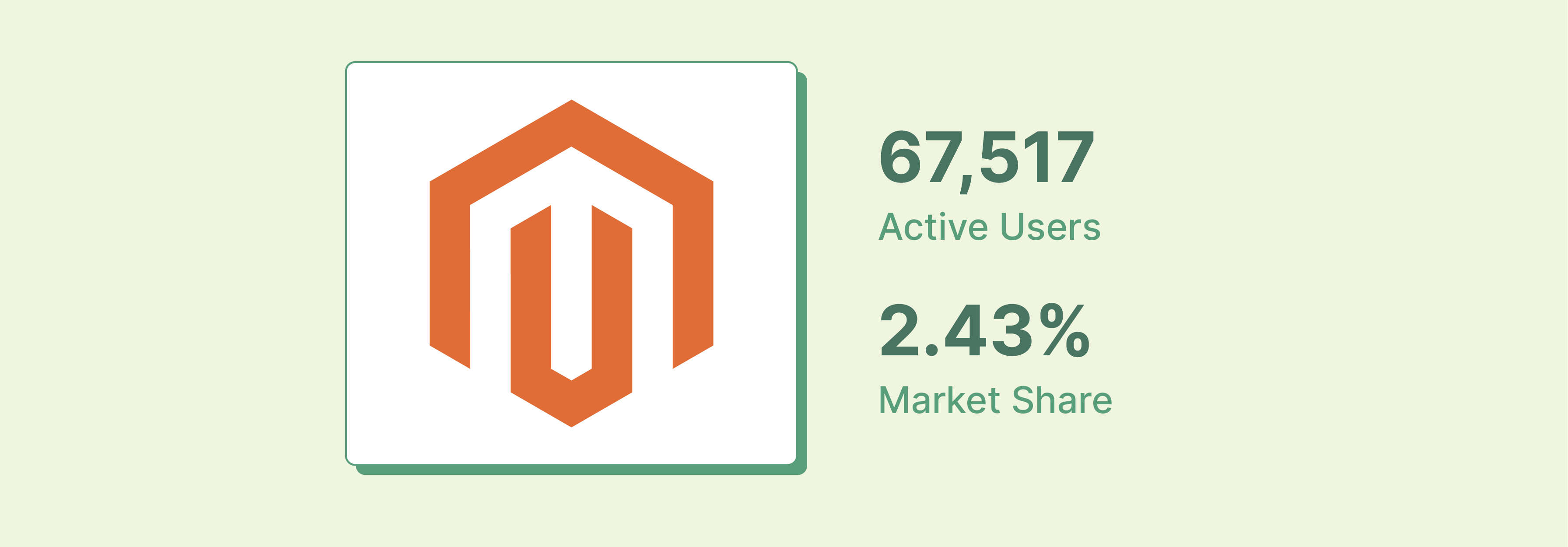
Adobe Commerce (formerly known as Magento) stands as one of the leading enterprise ecommerce platforms in 2026. Since Adobe acquired Magento in 2018, the platform has evolved into an integral part of the Adobe Experience Cloud, combining powerful ecommerce capabilities with AI driven personalization tools. According to Store Leads, Adobe Commerce currently powers 116,350 active stores worldwide (January 2026). This represents an 11% decline from early 2025 (approximately 131,000 stores). The losses occur primarily in the mid-market segment, where SaaS solutions like Shopify and BigCommerce scale more easily and cost-effectively. However, Adobe Commerce maintains a strong position in enterprise and B2B ecommerce, where Adobe Sensei AI, advanced B2B features, and high customizability often justify the higher development and maintenance costs for complex requirements.
The platform offers strong foundations for customer-centric stores: flexible theme and layout customization, robust product and inventory management, seamless checkout with multiple payment gateways, AI-powered personalization via Adobe Sensei (Live Search can boost conversion rates by up to 30%), headless commerce and PWA for app-like mobile experiences, advanced B2B features, and monthly isolated security fixes since January 2026. With smartphones accounting for nearly 80% of global retail website visits (Statista, Q3 2025), mobile optimization is no longer optional.
Magento's Customer-Centric Approach in Ecommerce Development
Magento empowers businesses to create extraordinary shopping experiences. Its vision is to connect commerce seamlessly. With Magento, you can enhance customer interactions and make online shopping enjoyable.
The platform emphasizes user experience and customer satisfaction. It provides tools and features that allow businesses to customize an e-commerce store, optimize the checkout process, and offer personalized content to customers.
By focusing on customer needs, companies foster trust and loyalty. Satisfied customers often become brand advocates, boosting reputation. Customer-centric approaches maintain customer engagement, such as personalized offers, Magento gift cards, and in-store rewards.
Since repeat customers are a reliable revenue source, creating a loyal customer base helps reduce acquisition costs. Meeting customer expectations also leads to higher spending over time. Long-term customers are a profitable asset, frequently outspending new ones.
Selecting the Right Adobe Commerce Agency
When evaluating potential partners, focus on their technical capabilities and industry experience. Here are the key services a qualified agency should offer:
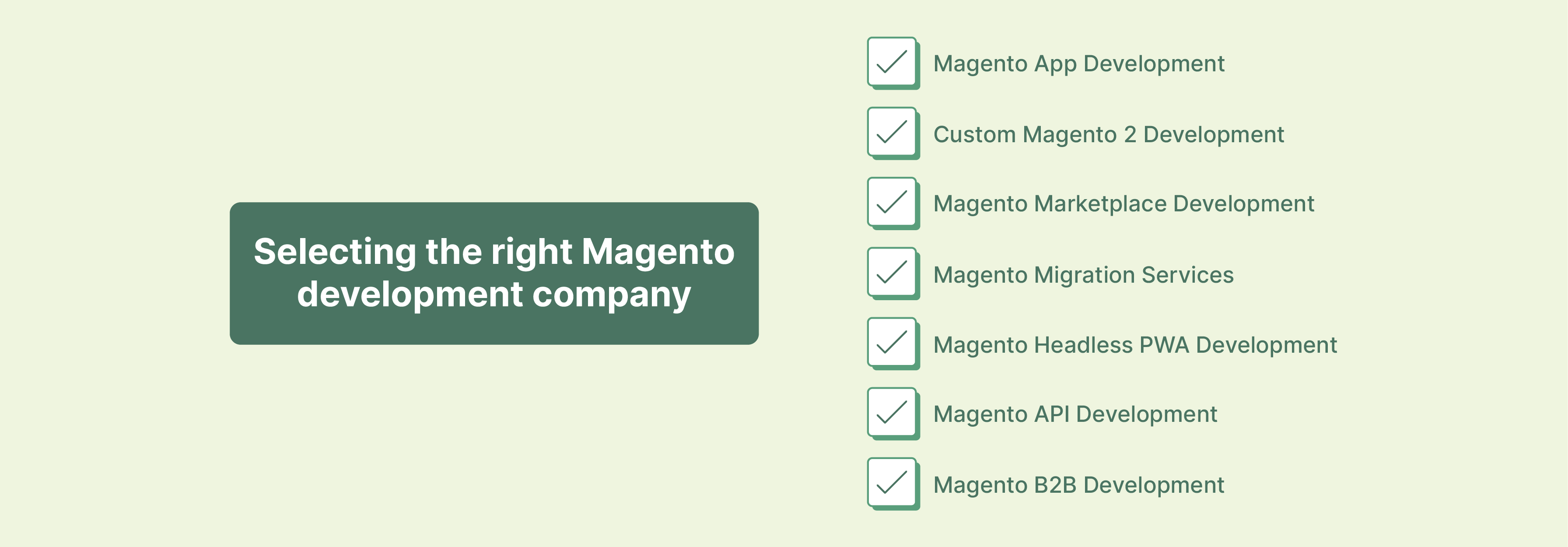
1. Magento App Development
You can create mobile applications that connect with your Magento store. Customers can browse products, buy things, and check orders from the app. A qualified team ensures your app functions properly across devices. When evaluating agencies, look for documented experience with Magento mobile app projects.
2. Custom Magento 2 Development
Custom Magento 2 Development can be useful for creating a website design only your store has or a tool that makes shopping easier for your customers. Having custom work done can make your website stand out from others.
3. Magento Marketplace Development
Magento Marketplace Development turns your store into a successful online marketplace among big businesses. Your site must offer the ease of uploading new items, managing inventory, and processing orders.
Building a robust marketplace involves careful planning and skilled developers who understand the nuances of the Magento platform. You must create user-friendly dashboards for vendors and ensure customers find it easy to search and buy products.
4. Magento Migration Services
Magento migration specialists help move your online store to a newer version of Magento. It helps you keep all your products, customers, and order data safe during the switch.
A reliable Magento development company ensures migrating the website without losing any information or causing downtime for your store. Professionals carefully ensure your store's appearance stays the same unless you want changes. They also test the Magento site before going live.
5. Magento Headless PWA Development
Magento Headless PWA Development combines web technology with mobile app convenience to make online shops fast and friendly on any device. A headless Progressive Web App (PWA) separates the frontend display from the backend data. It gives you control over how your store looks and works.
You can create a super-fast experience that feels like an app without needing customers to download anything. The PWA loads quickly, sends notifications, and even works offline. It makes your store more reliable, which can improve the customer journey.
6. Magento API Development
Magento API development helps your online store connect with other apps and services. Creating APIs for Magento makes shopping easier for your customers. For example, you can link payment systems, shipping tools, or customer service programs. Robust APIs ensure these connections are strong and work well.
7. Magento B2B Development
Businesses selling to other businesses face challenges like bulk orders, price negotiations, and managing corporate accounts. You can set up custom pricing for different client groups with Magento website development services.
A strong B2B e-commerce platform also needs robust self-service portals so clients can easily track orders and control their purchasing process. It allows large orders to be handled smoothly and provides a secure space for buyers to manage their information.
Process of Hiring Magento Developers
-
Decide what you need: Before you look for a developer, know what kind of work you want done. You may need a new store set up or some custom features added.
-
Read reviews: Check Clutch, G2, and Google reviews. Look for patterns in feedback, not just star ratings.
-
Ask for certifications: Certified Magento ecommerce developers know their stuff. Make sure the development company has certified professionals.
-
Price Negotiation: Get details on costs from different companies and compare them. Choose a plan that suits your website development budget.
-
Set clear goals: Tell the developers exactly what you want. It eliminates the room for errors.
-
Check support options: After they build your site, you might still need help. See if the company offers ongoing support or maintenance services.
The Role of Community in Magento Development
Engaging with the Adobe Commerce and Magento community provides businesses access to a vast network of experts worldwide. Businesses can seek advice, collaborate, and receive assistance from experienced professionals. Store owners and developers can access community forums, Adobe Experience League documentation, and extensive support resources.
The open source model of Magento Open Source promotes transparency and encourages contributions. Users can find answers, troubleshoot issues, and share best practices within the community. The Meet Magento events (such as Meet Magento Florida 2026 and Meet Magento Germany) have replaced the former Magento Imagine conference as the primary gathering points for the global community.
Community members develop Magento extensions and plugins that extend the platform's functionality. The Adobe Commerce Marketplace now hosts over 5,000 extensions covering everything from payment integrations to AI powered marketing tools. Using community created extensions and knowledge reduces development costs for B2C and B2B businesses.
Adobe Commerce Agencies to Consider
The following agencies appear in 2026 Clutch rankings for Magento development. Rankings fluctuate monthly. Verify current reviews and certifications before contacting any agency.
| Agency | Focus | Region |
|---|---|---|
| Capital Numbers | Custom B2B, Headless | Global |
| Magebit | PWA, Migrations | Europe |
| Webkul | Marketplace, Extensions | India |
| Codilar Technologies | B2B, Enterprise | India |
| Inchoo | Community, Open Source | Croatia |
| Scandiweb | Headless, High-traffic | Latvia |
| Rave Digital | API, Migrations | USA |
| Amasty | Extensions, Custom Dev | Global |
Note: Rankings and reviews change frequently. Always check current Clutch and DesignRush profiles, request relevant case studies, and verify Adobe certifications before signing contracts.
Challenges and Honest Considerations
1. Over-Engineering Kills Budgets
Many Magento projects fail because of excessive customization. What starts as "we need a custom checkout" becomes 6 months of development and €100,000+ in costs. Each custom module creates technical debt that compounds during upgrades.
Reality check: Before building custom features, check if an existing extension solves 80% of your need. The Adobe Commerce Marketplace has 5,000+ extensions. Custom development should be a last resort, not the default.
A survey by Forrester found 93% of companies benefited from customization, but they did not measure the long-term maintenance burden. Every custom module needs updating when Adobe releases security patches. Document everything or pay consultants to reverse-engineer your own code later.
The hidden cost: Many Magento projects fail not at launch, but during ongoing updates. Monthly isolated security fixes and annual major releases turn into nightmares on heavily customized systems, often costing 20–50% of the original project budget annually in maintenance and refactoring.
2. PHP Version Requirements and Migration
Adobe Commerce 2.4.7 supports both PHP 8.2 and PHP 8.3, giving businesses flexibility during migration. While PHP 8.2 reached end of service in December 2025, many stores still run on it successfully. Adobe Commerce 2.4.8 requires PHP 8.3 or 8.4, so businesses should plan their upgrade path accordingly. Ensure your development team can audit custom code for PHP compatibility.
3. Monthly Isolated Security Fix Management
With the 2026 transition to monthly isolated security fixes (non-cumulative patches for specific vulnerabilities), businesses need a structured update process. These monthly fixes are smaller and targeted, reducing testing overhead compared to quarterly releases. Plan for regular maintenance windows and consider implementing blue/green deployments. Full cumulative security patches are released annually in May.
4. Version End of Life Planning
Adobe Commerce 2.4.6 reaches end of support on August 11, 2026. Unlike older versions, 2.4.6 has no extended support option. After this date, Adobe will not release any security patches for this version. Businesses must proactively plan upgrades to 2.4.7 or 2.4.8 to maintain security compliance.
5. AI Ethics and Data Privacy Considerations
When implementing AI powered personalization features like Adobe Sensei, consider ethical implications of automated decision making. Ensure AI recommendations comply with privacy regulations and do not create discriminatory outcomes. Be transparent with customers about how AI influences their shopping experience.
6. Managing Customer Data and Privacy Concerns
-
With customer-centricity comes the responsibility of handling sensitive customer data securely.
-
Implement SSL encryption on your Magento site for secure data transmission.
-
Outline your data handling practices in a clear and detailed privacy policy.
-
A website development company will ensure your Magento store collects only necessary customer data to reduce risk.
-
Magento offers tools for managing customer consent in compliance with the GDPR.
-
Define data retention periods and delete data that's no longer needed. Over-retention can expose you to legal and security risks.
-
Develop a plan for responding to data breaches. Rapid response can minimize damage and legal repercussions.
-
Choose reliable third-party vendors for data security practices.
-
Educate customers on how to protect their data. Informed customers are less likely to fall victim to online scams.
7. Staying Updated with Adobe Commerce Ecosystem
-
Subscribe to Magento newsletters and official Adobe Commerce channels to receive updates on new features, patches, and security releases.
-
Attend Meet Magento events, Adobe Summit, and community webinars for insights into the latest trends and updates.
-
Always have backup and rollback plans to mitigate potential issues when implementing updates. Maintaining daily backups also ensures the safe migration of your website data.
-
Allocate hardware and software resources for ongoing maintenance and stay informed about version changes.
8. Addressing Different Business Sizes and Niches
-
Choose a web development team that offers modular design principles.
-
It will allow scalability and customization according to specific business requirements.
-
Conduct thorough market research to understand the evolving needs of different niches.
FAQs
1. What services does a typical Magento development company offer?
A development company provides many services, including, but not limited to:
-
Adobe Commerce and Magento development
-
UI/UX design and theme customization
-
Software and web development
-
Integrations, API development, and mobile app development for various industries
-
Headless commerce and PWA implementations
-
AI personalization setup with Adobe Sensei
2. Can an Adobe Commerce agency assist with Magento 2 upgrades?
You can find a company specializing in Magento 2 upgrades, theme customization, and extensions. A reliable company will ensure your ecommerce store remains up to date with the latest technologies. In 2026, this includes planning upgrades to PHP 8.3 compatible versions (required for Adobe Commerce 2.4.8) and applying monthly isolated security fixes.
3. How do you handle payment methods and shipping integration for ecommerce platforms?
Look for a web development company that seamlessly integrates Magento payment methods, including PayPal. Ensure efficient shipping solutions to enhance the customer centric experience of your ecommerce store.
4. Are Magento developers skilled in coding with PHP, HTML, CSS, and JavaScript?
Experienced Magento developers possess advanced coding skills in PHP (8.2 and 8.3), HTML, CSS, and JavaScript. They can ensure top-notch development solutions and PWA development services. Look for developers with Adobe Commerce certifications.
5. What is new in Adobe Commerce 2026?
Adobe Commerce 2026 introduces monthly isolated security fixes for faster vulnerability response, enhanced AI personalization through Adobe Sensei, improved B2B features including seller assisted shopping, and deeper integration with Adobe Experience Cloud. Adobe Commerce 2.4.8 requires PHP 8.3 or 8.4, while 2.4.7 still supports PHP 8.2.
6. When does support end for my Magento version?
Adobe Commerce 2.4.6 reaches end of support on August 11, 2026. Unlike older versions like 2.4.5, there is no extended support option for 2.4.6. After this date, no security patches will be released. Running unsupported versions exposes your store to security vulnerabilities. Plan your upgrade strategy at least 6 months before the EOL date.
7. How do I integrate AI into my Magento store?
Adobe Sensei provides built in AI capabilities for Adobe Commerce, including Live Search, Product Recommendations, and intelligent category merchandising. Your development company can implement these features through the Adobe Commerce admin panel or via API for headless setups. Third party AI extensions are also available through the Adobe Commerce Marketplace.
8. When selecting a Magento development company, what should I consider?
Look for partners with a strong track record in Magento development services and a commitment to quality. Verify Adobe certifications, check their portfolio, and ensure they offer ongoing support. A good development team should understand both technical requirements and business objectives.
9. What is the difference between Magento Open Source and Adobe Commerce?
Magento Open Source is the free, community edition ideal for small to medium businesses. Adobe Commerce (formerly Magento Commerce) is the enterprise version with advanced features including B2B functionality, AI personalization, cloud hosting options, and dedicated Adobe support. Adobe Commerce licensing starts at $22,000 per year for merchants with less than $1M annual revenue. Costs scale with GMV, reaching $40,000+ for cloud versions and over $100,000 for high-revenue enterprises.
Summary
Choosing the right Adobe Commerce partner is critical for long-term success. Evaluate agencies based on Adobe certifications, relevant reference projects, upgrade expertise, and long-term support models. Only then will your store remain scalable, secure, and future-proof, even as overall store numbers decline in the mid-market segment.
Before signing contracts, request case studies for projects similar to yours, clarify maintenance and update responsibilities, and ensure the agency can handle PHP 8.3+ migrations and monthly security patches. The initial build is just the beginning: plan for ongoing costs of 20–30% of your original budget annually.